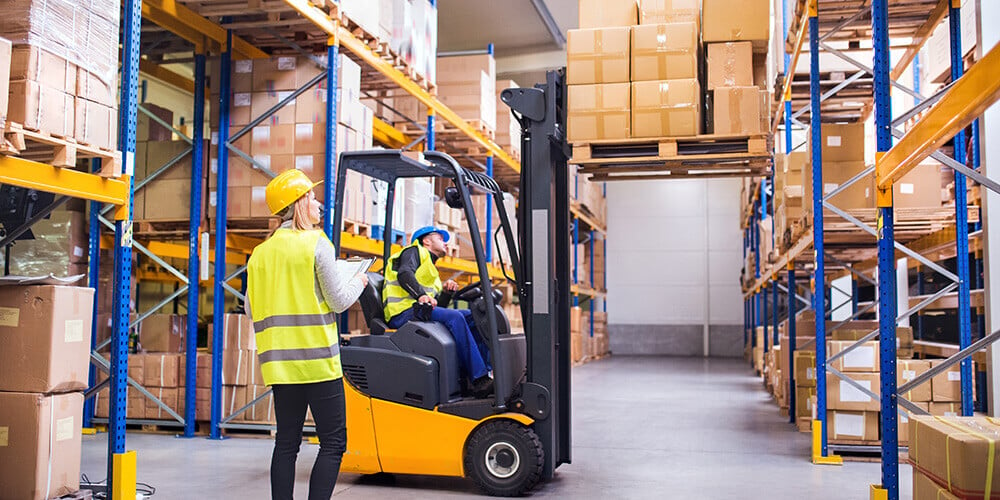

Pallet rack safety bars — sometimes called support bars or safety barriers — are members set perpendicular to the load beams to catch misplaced pallets before they fall between the front and back beams. They’re one of the simplest forms of pallet rack fall protection. North American codes (CSA A344, ANSI MH16.1) treat them as optional but recommended. Install at least two per pallet position, attached to both beams so they can’t slide out of place.
Having material fall from a pallet rack can injure workers, destroy inventory, and trigger a compliance problem all at once. Pallet racks are one of the most efficient ways to store goods, but without the right accessories, a single misplaced pallet can drop between beam levels or into the aisle below. Several racking components help reduce the risk of falling product — wire mesh decks, nets, screen panels, support bars, and safety bars. This article focuses on safety bars: what they do, when they’re recommended, and how to install them correctly.
What are pallet rack safety bars?
According to North American codes and standards, a safety bar is defined as:
“a member supported by and oriented perpendicular to load beams, intended to temporarily support misplaced pallets.”
In other words, a safety bar’s job is to help reduce the risk of a pallet falling when it isn’t resting properly on both the front and back beams. The word temporarily matters: safety bars are meant to catch a misplaced pallet, not to carry a full load during normal storage. Any pallet that lands on a safety bar should be re-positioned as soon as it’s found. If a pallet can’t rest directly on both beams because of its size, strength, or design, you need pallet support bars instead — which brings us to the most common point of confusion.
Safety bars vs. pallet support bars — what’s the difference?
“Safety bars” and “support bars” are often used interchangeably, and the two members look almost identical on the beam. But they’re rated for different jobs and shouldn’t be swapped:
| Component | What it does | Load rating |
|---|---|---|
| Safety bars (ANSI MH16.1: “safety barriers”) |
Temporarily catch a misplaced pallet so it doesn’t fall between the beams. | Not rated to carry a full pallet load. |
| Pallet support bars | Fully support a pallet that can’t rest on both beams because of its size, strength, or design. | Load-rated for continuous support. |
| Pallet stoppers | Stop a pallet from being pushed too far back and off the rear beam — a different failure mode. See DAMO PALLET STOPPER. | Positioning device, not a fall-catch. |
Are pallet rack safety bars required?
Safety bars are not mandatory under North American codes, but they are highly recommended. There are situations where extra fall protection becomes far more important: for example, beam levels directly above a tunnel or door, where pedestrians and forklift drivers are more likely to be underneath. In those spots, additional measures such as wire mesh decking (which can come with safety bars already integrated) are often used.
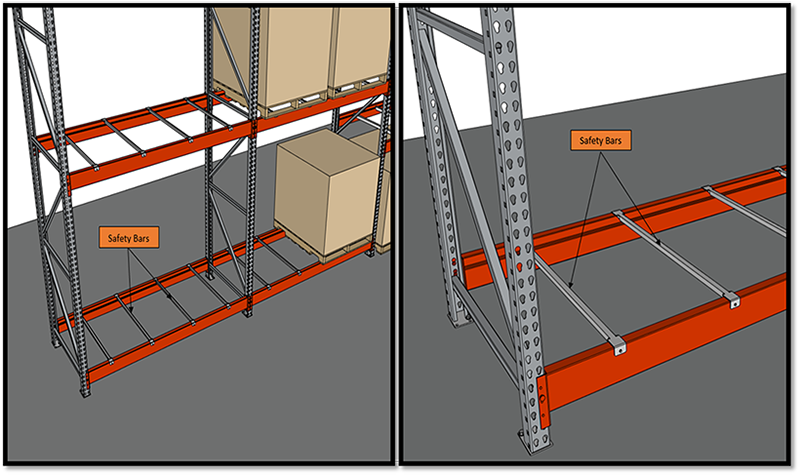
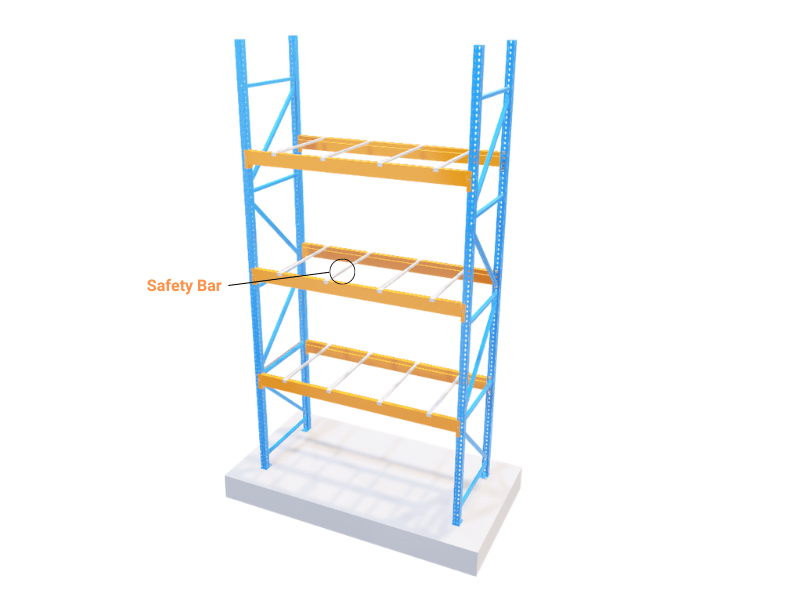
Figure 1: A representation of safety bars within a pallet rack system
Here’s what the two main standards actually say.
ANSI MH16.1 (United States) — the rack design code referenced by the IBC
Section 8.4.5, Product Fall Protection, states:
“The owner should specify to the designer any locations where operations may require horizontal or vertical safety barriers. These barriers shall prevent products from falling into those areas.”
ANSI puts the responsibility on the owner to identify where falling product is a risk and to take preventive measures. Safety bars are one appropriate measure, since they act as barriers that help keep products from falling between beams.
CSA A344 (Canada) — User Guide for Steel Storage Racks
Section 5.3.5.2 (a) lists optional safety accessories, including:
“the addition of pallet safety bars or wire mesh decks placed between beams to reduce the risk of misplaced pallets from falling between supports.”
CSA treats safety bars as optional — but acknowledges their effectiveness at reducing the risk of falling pallets.

How do you install pallet rack safety bars?
Correct installation is what makes the difference between a working safety bar and a new hazard. Follow these rules:
- Install each safety bar between the front and back beam of the same beam level.
- Position it perpendicular to the beams.
- Attach it to both beams — screwed directly into the beam, or clipped in if the bars and beams are designed to connect that way — so it’s positively restrained against lateral displacement.
- Use at least two safety bars per pallet position. A beam level built for two pallets, therefore, needs four bars on the pair of beams.
- Place the bars at roughly 1/4 and 3/4 of the pallet’s width (Damotech’s recommendation).
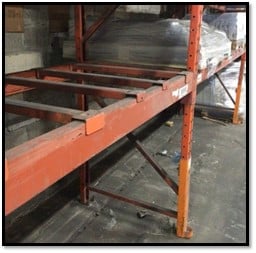
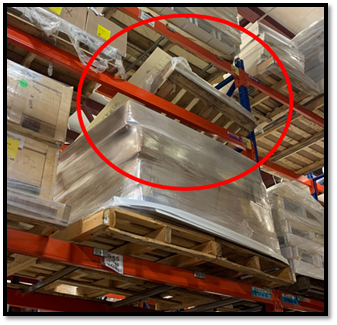
Attaching bars to both beams isn’t an optional detail — it’s the whole point. Unattached bars slide along the beam and open up larger gaps beneath a pallet, which makes a fall-through more likely, and a loose bar can itself become a falling object. CSA specifically calls for identifying safety bars that aren’t positively restrained against lateral displacement during a rack inspection. Bars that slide out of position are a recurring issue found during Damotech conformity inspections — you can often see it in the scratched paint where a bar has been sliding back and forth.
The bottom line on pallet rack safety bars
Safety bars — or “safety barriers,” in ANSI’s language — are one of the simplest, lowest-cost ways to reduce the risk of a misplaced pallet falling through a beam level. They aren’t mandatory, but both CSA A344 and ANSI MH16.1 recommend them, and they only do their job when installed correctly: at least two per pallet position, placed at roughly 1/4 and 3/4 of the pallet width, and attached to both beams so they can’t slide out of place. If you’re not certain yours meet that standard, a compliance inspection will confirm it — and catch the loose or missing bars that tend to go unnoticed until a pallet falls.
Frequently asked questions about pallet rack safety bars
Are pallet rack safety bars required?

No. CSA A344 and ANSI MH16.1 treat safety bars as optional but recommended. ANSI MH16.1 §8.4.5 makes it the owner’s responsibility to identify locations that need fall protection — such as beam levels above tunnels, doors, or pedestrian aisles.
How many safety bars do you need per pallet?
At least two per pallet position, so a beam level designed for two pallets needs four. Damotech recommends placing them at roughly 1/4 and 3/4 of the pallet width.
What’s the difference between safety bars and pallet support bars?
Safety bars temporarily catch a misplaced pallet; pallet support bars are load-rated to fully carry a pallet that can’t rest on both beams.
Do safety bars need to be attached to the beams?
Yes. They must be positively restrained against lateral displacement — screwed or clipped to both beams. Unattached bars slide out of position, widen the gap under a pallet, and can become falling objects themselves.
Are safety bars the same as safety barriers?
Yes. ANSI MH16.1 uses the term "safety barriers" for the horizontal members that keep product from falling between or off the beams — the same component the industry commonly calls safety bars. Both names refer to the same fall-protection accessory.
Can safety bars support a full pallet load?
No. They’re designed to temporarily catch a misplaced pallet, not to carry weight during normal storage. If a pallet can't rest on both beams, use load-rated pallet support bars instead.
References
Canadian Standards Association. (2017). User guide for steel storage racks (A344-17).
American National Standards Institute. Specification for the Design, Testing and Utilization of Industrial Steel Storage Racks (MH16.1-2023).
Commission on workplace standards, fairness, health, and safety. (2005). Prevention Guide: Safety of Pallet Racks – Construction, purchase, installation, and use (CNESST).