
Are your warehouse racking systems CNESST-compliant? Would your pallet racking pass inspection, or would an inspector find missing load plaques, hidden damage, and “temporary” fixes that have become permanent?
For Quebec warehouse and safety leaders, pallet racking maintenance is essential. Questions about Quebec pallet rack regulations often lead warehouse teams to CNESST guidance on inspections, load-capacity information, maintenance, and worker training. Warehouse operators must understand their applicable workplace safety obligations and take appropriate measures to maintain the safety of their pallet racking systems.
In this article, we’ll walk through how to:
- Understand CNESST’s expectations for pallet racking compliance
- Turn day-to-day pallet racking maintenance into simple habits
- Overcome common racking maintenance roadblocks
- See how partners like Damotech can support your program
A quick note on terminology: CNESST (the Commission des normes, de l'équité, de la santé et de la sécurité du travail) was formed in 2016 when Quebec merged the former CSST — the Commission de la santé et de la sécurité du travail — with two other labour bodies. Much of the practical rack-safety guidance predates that change, including the CSST’s own pallet rack prevention guide, which remains a useful reference for warehouse teams. You can download the full CSST Safety of Pallet Racks guide here.
Why Pallet Rack Maintenance in Quebec Matters for CNESST Compliance
Quebec boasts a thriving network of warehouses that support a wide range of industries, from cold-chain food distribution to heavy manufacturing. These facilities handle everything from fragile perishable goods to robust industrial equipment, demanding advanced storage solutions that prioritize durability and strict adherence to safety regulations. These warehousing operations rely on high-density pallet racking, vertical storage, and, in many cases, automated systems to remain competitive.
However, high-efficiency storage brings real risks: heavy loads over work areas, forklifts navigating narrow aisles, and constant operational pressure. When pallet racks are overloaded, damaged, or poorly maintained, the consequences can be severe, including collapses, injuries, and costly emergency repairs.
CNESST guidance on racking focuses on:
- Proper design, installation, and anchoring
- Clear display of load capacities
- Regular inspections and preventive maintenance
- Worker training and safe operating procedures
A strong racking maintenance program ties all these elements together: inspections, documentation, repairs, protection, and training—ideally in a continuous improvement loop rather than one-off projects.
CNESST Must-Haves for Pallet Racking Compliance
Ensuring safety and compliance in warehouse operations is a top priority, and it starts with two fundamental elements: certification and training.
1. Certifications and Documentation
CNESST expects employers to maintain the safety of work equipment throughout its life cycle, not just at the time of installation. For pallet racks, this entails implementing a formal inspection program to identify damage or wear that compromises structural integrity and taking action based on the findings.
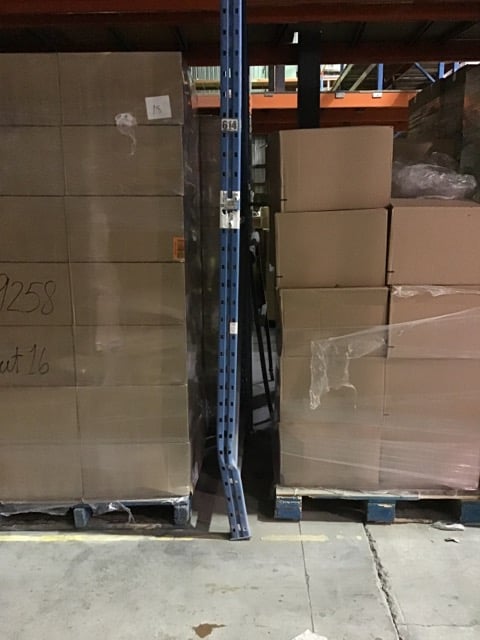
A bent upright like this reduces load-bearing capacity and should be flagged during inspection
CNESST prevention guidance recommends routine inspections—often monthly, depending on the intensity of warehouse activity—and an annual specialized inspection:
- Routine inspections by trained in-house staff
- At least one annual inspection, preferably by a qualified external expert
The appropriate frequency of routine inspections should reflect the level of activity in the warehouse and the conditions in which the racks are used. CNESST’s prevention material describes monthly inspections as a recommended basis while noting that the frequency depends on warehouse activity.
Warehouses must also ensure that any repairs or maintenance tasks are performed by properly qualified parties. Racking systems should be installed according to the approved design, and load capacity labels indicating the maximum permissible weight must remain visible at all times—something CNESST repeatedly highlights as a critical safety requirement. Overloading or unclear load information can contribute to unsafe rack use.
2. Training
CNESST requires employers to properly train workers before they perform tasks, whether they’re new, experienced, or doing so for the first time. Training includes:
- Safe use of pallet racking systems
- Proper material handling
- Forklift operation, where applicable
- Emergency procedures
- Correct lifting techniques
Training isn’t just a regulatory requirement—it’s one of the most effective ways to reduce risk. When employees understand racking hazards, they are better positioned to identify and report issues early.
Robust training can reduce incidents linked to:
- Improper loading
- Forklift impacts
- Unsafe, improvised repairs
Day-To-Day Pallet Racking Maintenance: 3 Practices CNESST Emphasizes
A strong pallet racking maintenance program isn’t built once a year. It’s reinforced daily through three operational habits: load, impact, and environment.
1. Know Your Limits: Load Capacity and Safe Racking
A non-negotiable rule in warehouse safety is to clearly display the load capacity on all structural storage systems. This ensures employees always know the limits of the structure that supports them and how to maintain structural stability.
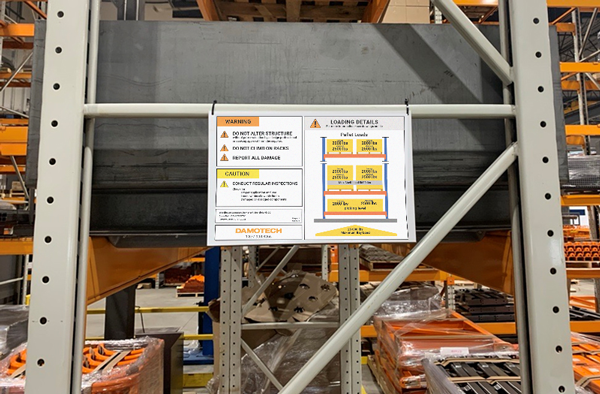
But signage alone isn’t enough.
Teams should also be trained in proper weight distribution, especially when it comes to:
- Beam deflection
- Damaged pallets
- Uneven weight distribution
Even loads within the weight limit can jeopardize the structure if placed improperly.
2. Protect Racks from Forklift Impacts
Forklifts are essential, but forklift impacts are also a frequent cause of rack damage. CNESST emphasizes the importance of controlling traffic and reducing the risk of impact. Its prevention material notes that striking an upright can weaken the structure and reduce the rack’s load-bearing capacity.
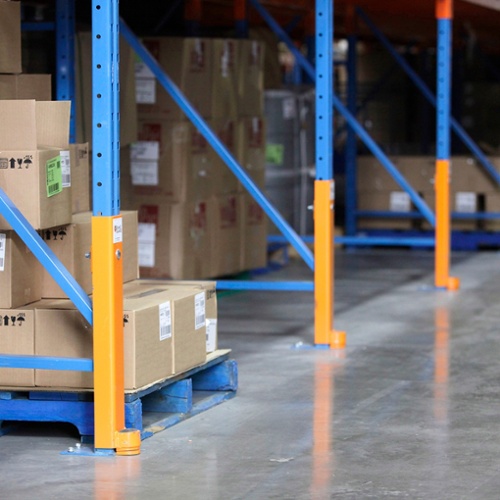
Damotech provides several rack protection solutions designed to help reduce damage from forklift and pallet impacts, including:
- DAMO GUARD – a steel upright column guard that protects the vulnerable lower portion of rack columns
- DAMO BASE GUARD – a low-profile, floor-anchored column and baseplate protector that allows beams to be installed near floor level
- DAMO END GUARD – made-to-measure, floor-level protection for exposed rack row ends
DAMO GUARD protects the lower portion of rack uprights, where impacts commonly occur. DAMO BASE GUARD protects rack columns and baseplates while preserving access for low beam configurations. DAMO END GUARD protects exposed row ends in areas where forklift traffic creates a greater risk of contact with the racking system.
3. Keep the Environment Under Control
When discussing safety, we typically focus on equipment and technique. But the environment itself—how clean and controlled your warehouse is—plays a surprisingly important role.
For instance, if your warehouse is consistently messy, employees will start taking shortcuts, stepping around clutter, or making careless moves to navigate obstructed aisles. This significantly increases the chance of accidents. Maintaining clean, unobstructed aisles is essential for preventing collisions and ensuring safe access during inspections.
Warehouse teams should also monitor moisture, chemicals, and other environmental conditions that may contribute to corrosion or deterioration of rack components. CNESST prevention material notes that rack condition can deteriorate over time through corrosion and other environmental or structural effects.
Common Challenges in Achieving CNESST Pallet Rack Compliance
Even committed organizations run into hurdles. Here are three of the most common.
1. Lack of Inspection
Some warehouses rely solely on in-house inspections to save costs, but skipping formal inspections can allow minor issues to develop into major—and often expensive—repairs. CNESST guidance and Damotech’s own inspection programs both stress the importance of early detection.
2. Lack of Awareness
Quebec workplace safety information is widely accessible. However, many workers may not fully understand the requirements and recommended practices for pallet racking.
Reasons include:
- Limited training budgets
- Misinterpretation of compliance rules
- Lack of dedicated resources
3. Variability in Racking Systems
Older racking systems may not meet today’s safety expectations. Upgrading or adapting them can be costly and technically challenging, especially when components are incompatible or no longer manufactured. Rack safety partners, such as Damotech, help assess compatibility and determine a safe upgrade path.
Conclusion: Pallet Rack Maintenance and Long-Term CNESST Compliance in Quebec
Maintaining safe and compliant pallet racking systems is essential for protecting employees and assets and ensuring operational continuity. By prioritizing regular inspections, employee training, proper load management, and clear procedures—and by following applicable Quebec workplace safety requirements and CNESST guidance—warehouses can significantly reduce risks, cut expenses, and prevent costly downtime.
Challenges such as aging equipment or limited awareness do exist, but addressing them early creates a safer, more efficient working environment. Establishing a routine maintenance schedule and investing in incremental upgrades help facilities stay aligned with modern standards and CNESST expectations.
Damotech partners with warehouses across Quebec and North America to deliver engineering inspections, engineered repair solutions, and durable protection systems that make pallet racking maintenance easier and support ongoing CNESST compliance efforts.
Download the free CSST Safety of Pallet Racks guide here — 116 pages covering rack construction, installation, use, inspection, maintenance, and damage assessment (PDF).
FAQ: CNESST Pallet Rack Compliance & Rack Maintenance
Why is pallet racking maintenance essential for CNESST compliance?

Pallet racking maintenance is essential because Quebec warehouses rely heavily on high-density racking and handling of heavy loads, which create significant risks. When racks are overloaded, damaged, or poorly maintained, consequences can include collapses, injuries, and costly emergency repairs. CNESST emphasizes the importance of proper design, installation, load capacity signage, regular inspections, and worker training to prevent these issues.
How often should pallet racks be inspected under CNESST guidance?
CNESST prevention material describes monthly inspections by trained in-house staff as a recommended basis, with the appropriate frequency depending on the level of warehouse activity and the conditions under which racks are used. It also points to at least one annual inspection, preferably by a qualified external expert.
What are CNESST’s main expectations for pallet racking safety?
CNESST focuses on proper racking design and installation, visible load capacity plaques, regular inspections and preventive maintenance, and thorough training for workers on safe operating procedures.
What kind of worker training does CNESST require for racking compliance?
Employees must be trained before performing any task, whether they are new to the role or experienced. Training must cover the safe use of pallet racking, proper material handling, forklift operation, emergency procedures, and correct lifting techniques. Adequate training also helps workers detect hazards early and avoid improper loading, collisions, or unsafe repairs.
How can warehouses prevent rack damage from forklifts?
Forklift impacts are a frequent cause of rack damage. CNESST emphasizes controlling traffic and reducing impact risk, and notes that striking an upright can weaken the structure and reduce load-bearing capacity. Warehouses can also add engineered guarding — such as DAMO GUARD, DAMO BASE GUARD, and DAMO END GUARD — to protect the lower portion of uprights, baseplates, and exposed row ends where contact is most likely.
What day-to-day habits help maintain pallet racking safety?
Three daily habits support strong rack maintenance:
- Clearly displaying load capacity and ensuring employees understand safe weight distribution.
- Protecting racks from forklift impacts with proper guarding.
- Keeping the warehouse environment clean, uncluttered, and temperature-controlled to avoid corrosion and reduce accident risks.
What challenges do warehouses face when trying to stay compliant?
Common challenges include skipping formal inspections, a general lack of awareness of racking safety requirements, and variability in older or incompatible racking systems that may not meet today’s safety expectations.
How can Damotech help warehouses meet CNESST pallet racking compliance?
Damotech supports warehouses through engineering inspections, certified repair solutions, and durable protection products designed to simplify pallet racking maintenance and help ensure ongoing compliance with CNESST regulations.