FREE WEBINAR
Rack Safety Risks That Get Expensive Fast — and how to fix them

Date: June 9, 2026 ⋅ Time: 12pm EDT ⋅ Duration: 1 Hour

Damotech
Damotech

"The dangerous moment is not always the impact. It's the hour after, when everyone assumes someone else has handled it."

Discover how to de-risk your warehouse

Learn more about this webinar

It’s Monday morning. Orders are backed up. A forklift clips the end of a rack aisle.

Nothing collapses. But the damage is serious enough that the bay has to be unloaded and taken out of service.

Ten pallet positions blocked. Product moved. Aisle slowed. Maintenance needs answers. Operations wants the space back. And then the questions start:

  • Can this be repaired?
  • Does the rack still have the same capacity?
  • Who approves the next step?
  • Where is the documentation?
  • What if the team makes the wrong call?

One impact, now costing time, space, labor, and confidence. That’s how rack safety risks get expensive — often long before a collapse ever happens.

In this webinar, Marc Rousseau walks through six rack safety risks that commonly go unnoticed in busy warehouses. You’ll learn how to spot them earlier, manage them with clear protocols, and keep small issues from becoming costly repairs, downtime, failed audits, or incidents your team has to explain.

No theory. Just real situations warehouse managers deal with every day and the practical steps that keep them under control.

You’ll leave with:

  • The six risks to audit in your facility this month
  • A clearer framework for repair-vs.-replace decisions

Save your seat and find out what may be hiding in your rack safety program.

SPEAKER

Portrait_Marc_Rousseau

Marc Rousseau
Vice-President of National Accounts and Strategic Partnerships

With more than 10 years of industry experience, Marc works directly with operations leaders at some of North America’s largest warehouse and distribution networks. A former U.S. Army officer and graduate of West Point with degrees in engineering management and mechanical engineering, plus an MBA from the College of William & Mary, he brings an expert eye and patterns from hundreds of facilities into one practical session.
Damotech
Damotech
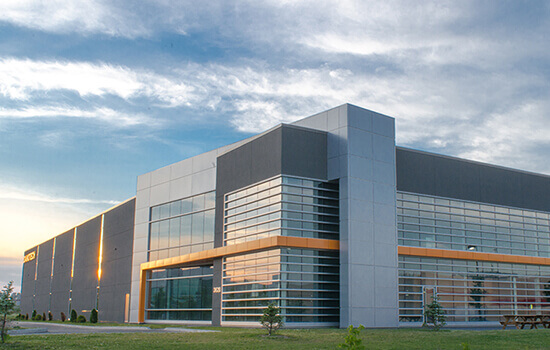
Damotech Headquarter in Boisbriand, Quebec, Canada

About Damotech

Damotech is the largest and most trusted rack safety and repair company in North America. For 35 years, Damotech has been helping warehouse owners keep their warehouse environment safe by maintaining their rack’s structural integrity. Damotech’s rack repair and rack protection solutions are safe, cost-effective, and less disruptive to install than alternative solutions, making them the preferred choice of business-minded warehouse operators and safety managers. Damotech also performs rack compliance inspections, load capacity calculations, rack safety training and now offers a state-of-the-art rack inspection management software.


Damotech

FAQ ABOUT RACK SAFETY PROGRAM

How often should pallet racks be inspected?

FAQ arrow
Industry guidance points to a layered approach: daily visual checks by forklift operators and warehouse staff, periodic walkthroughs by supervisors, and at least an annual inspection by a qualified person, typically an engineer or certified rack inspector. Any impact, no matter how minor it may seem, warrants an immediate inspection before that bay goes back into service.

Who is qualified to inspect a rack system?

FAQ arrow
Routine visual checks can be done by trained internal staff. For formal inspections involving load capacity, damage assessment, or compliance, a qualified person with an engineering background and rack-specific training will evaluate structural integrity and recommend action.

Can a damaged upright be repaired, or must it always be replaced?

FAQ arrow
Both are possible, but the decision shouldn’t be made on the warehouse floor. Welding or straightening a damaged upright in-house is not accepted under any major standard. Engineered repair kits, designed and certified to restore original load capacity, are an option for many types of damage. A qualified inspector can tell you whether repair is viable in your specific case or whether replacement is the right call.

What should the team do immediately after a forklift impact?

FAQ arrow
Treat any contact as potentially damaging, even when nothing looks wrong. Tag the location, take photos, evacuate the affected bay (unload it if loaded), and keep it out of service until a qualified person has assessed it. The “it still looks fine” call is where small incidents quietly become bigger ones.

What documentation should we be keeping?

FAQ arrow
At a minimum: load capacity plaques posted on every rack system, configuration drawings, inspection reports, records of any damage and the action taken, and certifications for any repairs. Auditors and insurers ask for this. So do operations leaders when something goes wrong.