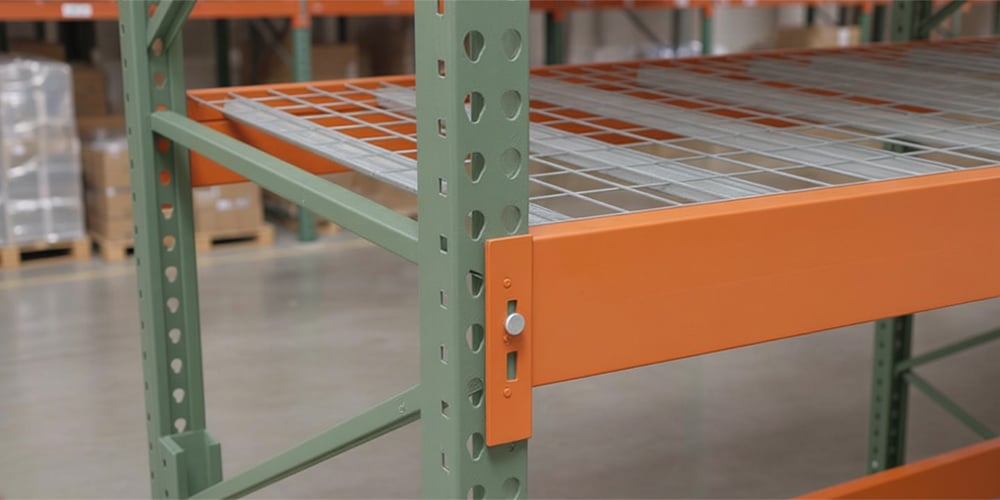

In the pallet rack industry, there are several rack styles and types, each with its own advantages. One of the most common systems used in North American warehouses is teardrop pallet racking.
Depending on the purpose or intended loading of the racking system, you may want to select one style of racking over another. Also, understanding that pallet racks are a long-term investment is crucial when selecting them. This article will explore the most common racking style: teardrop pallet racks. This rack style gets its name from the teardrop-shaped holes located on the front face of the column, as shown below.
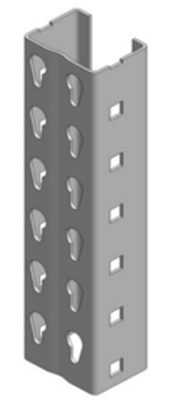
Generally, teardrop pallet racks are made using roll-formed steel. Roll forming involves continuously bending a long strip of metal by passing it through a series of rolls, each of which makes a small, incremental bend. This process gradually shapes the metal into the desired cross-section. Form rolling also increases the yield and tensile strength of the steel while keeping the components lightweight, allowing teardrop pallet racks to reach great heights without compromising carrying capacity.
Advantages of Teardrop Pallet Racks
Easy Assembly
Teardrop pallet racks feature a bolt-less design. The beams slide into the upright via the teardrop-shaped holes and lock into place. The larger part of the teardrop hole guides the beam connector into place, while the smaller part provides a tight, secure fit. See below for a close-up of an upright-to-beam connection via the teardrop holes:
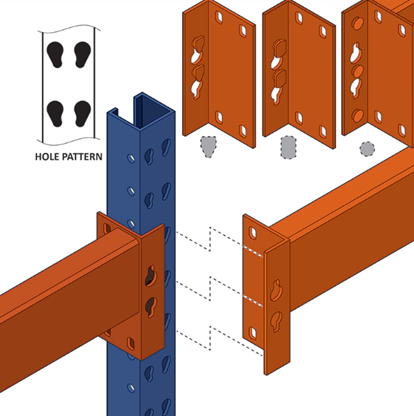
Image Source: Ziglift
Teardrop pallet racking also features a locking device that secures the beam into the upright, preventing accidental dislodgement. Furthermore, the ease of assembly can minimize downtime, reduce manufacturing and labor costs, and ultimately, eliminate the need for bolts or specialized tools.
Adjustability
Thanks to their design, teardrop pallet racks are easily adjustable to accommodate varying pallet sizes and load capacities. Thus, they are especially useful for warehouses with frequently changing inventory. Generally, the distance between the centers of each teardrop hole is 2 inches, allowing ample flexibility in adjusting teardrop shelving.
Space Optimization
The modular design of teardrop pallet racks allows for easy reconfiguration, expansion, and reduction of racking systems. Also, by maximizing vertical space, warehouses can make the most of their footprint with teardrop racking systems.

Disadvantages of Teardrop Pallet Racking
Impact Vulnerability
Although form rolling offers several benefits, it uses thinner steel, which is more susceptible to damage from forklifts and other warehouse equipment. As such, warehouses may choose to protect their teardrop racking systems further.
For more information on protecting columns, visit our blog post 6 Types of Pallet Rack Protectors: Which to Use and When.
Lower Capacity
The thinner steel used in form rolling also reduces the load capacity of teardrop racks. This can limit the use of roll-formed teardrop racks in heavy industry.
For more information on the codes and regulations governing load capacity requirements, please refer to our blog post, Load Capacity Calculation Requirements for Racks.
Standardized Components
Although teardrop racks have standardized components that offer enhanced flexibility, they are generally less customizable than structural racks. This other type of racking can be engineered to precise specifications.
Common Accessories for Teardrop Pallet Racks
The versatility of teardrop pallet racks increases with the variety of accessories that may be used to enhance their functionality and safety. Common accessories include, but are not limited to:
- Wire Decking – Offers a secure platform for storing items that do not align perfectly with pallet beams. Additionally, it promotes better air circulation, which is advantageous for fire safety and inventory management. As shown below, the wire decking covers the open space between the front and back beams.
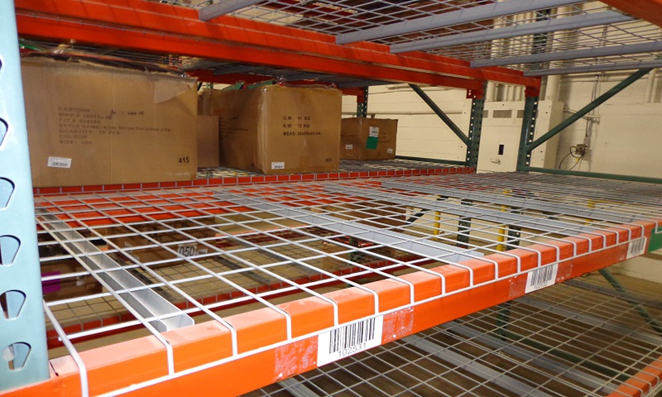
Standard wire decking for teardrop pallet racking. Image Source: YankeeSupply.
- Safety Bars – Provide additional support under the pallets to help distribute the load more evenly across the teardrop beams. As shown below, the safety bars run across the front and back beams.
- Safety Pins – Add an extra layer of protection to help prevent beams from disconnecting when struck with an upward force by a pallet load or a mechanical lift. As shown below, this type of safety pin, known as a J-Pin, slots in the side holes of the teardrop columns. Also, notice the integrated safety device located at the beam clip.
For more information on safety pins and their usefulness, please consult the blog post Pallet Rack Safety Pins: Extra Security in a Tiny Package.
Common Applications of Teardrop Racking
Due to their versatility and efficiency, teardrop pallet racks are used in various industries. A common example is warehouses with high goods turnover, such as e-commerce fulfillment centers or retail warehouses. These types of racks are also common in warehouses with a wide variety of goods, as they can be modified to accommodate varying load sizes.
However, like all pallet rack systems, teardrop racks can be vulnerable to forklift impacts and other operational damage over time. When rack damage occurs, it is important to evaluate the structural integrity of the system and determine the most appropriate repair solution.
Damotech’s engineered rack repair kits are custom-manufactured to repair any pallet racking system, including standard teardrop designs as well as less common, obsolete, or discontinued rack profiles. Find out more.

Frequently Asked Questions About Teardrop Pallet Racks
What is a teardrop pallet rack?

A teardrop pallet rack is a type of pallet racking system named after the teardrop-shaped holes located on the front face of the rack columns. These holes allow beams to slide into the uprights and lock into place, creating a boltless connection between the beams and the rack frame.
Why are teardrop pallet racks easy to assemble?
Teardrop pallet racks use a boltless design in which beams slide into the uprights through teardrop-shaped holes and lock into place. The larger portion of the hole guides the beam connector, while the smaller portion secures it. This design simplifies installation, reduces downtime, and eliminates the need for bolts or specialized tools.
How adjustable are teardrop pallet racks?
Teardrop pallet racks are designed to be easily adjustable. The holes in the uprights are typically spaced two inches apart, allowing beam levels to be repositioned to accommodate different pallet sizes and load requirements.
What accessories can be used with teardrop pallet racks?
Several accessories can be used to enhance the functionality and safety of teardrop pallet racks, including:
- Wire decking provides a platform for storing items that may not align perfectly with pallet beams and improves air circulation.
- Safety bars provide additional support under the pallets and help distribute loads across the beams.
- Safety pins, such as J-pins, help prevent beams from becoming dislodged when struck by upward forces from pallets or lift equipment.
What are the advantages of teardrop pallet racks?
Teardrop pallet racks offer several advantages, including easy assembly, high adjustability, and a modular design that allows racks to be expanded, reduced, or reconfigured. Their ability to maximize vertical space also helps warehouses make better use of their available footprint.
What are the disadvantages of teardrop pallet racks?
Because teardrop racks are typically manufactured using roll-formed steel, they use thinner material than structural rack systems. This makes them more susceptible to impacts from forklifts and other warehouse equipment and can result in lower load capacities compared with heavier structural racking systems.
Where are teardrop pallet racks commonly used?
Teardrop pallet racks are commonly used in warehouses with high goods turnover, such as e-commerce fulfillment centers and retail distribution facilities. They are also well suited for warehouses that store a wide variety of products, as their adjustable design can accommodate various load sizes.