In the time it takes to read this sentence, a forklift somewhere is turning too tightly near a dock door, battery charging station, or pedestrian path. Most impacts are not random. They happen in predictable places.
Repeated strikes near doors, equipment, and walkways are often warning signs that physical protection may be missing. In a high-volume warehouse, a single impact can lead to operational downtime, emergency repairs, blocked aisles, and costly disruptions.
This guide explains where safety bollards should be installed, where they should not, and what mistakes to avoid before the next near miss becomes a documented incident.
What Are Safety Bollards?
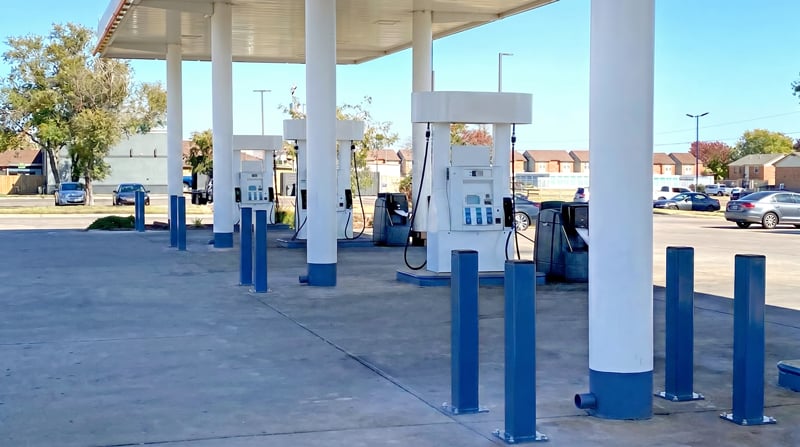
Safety bollards are vertical protective posts used to help separate vehicle traffic from people, equipment, buildings, and other critical assets. In industrial and commercial environments, they are commonly installed near loading docks, doorways, pedestrian walkways, rack aisles, gas pumps, storefronts, parking areas, machinery, utility equipment, and building corners.
Why Are Safety Bollards Important?
Two storefront crash cases show how prior incidents, known hazards, and practical protective measures can become central in litigation after a vehicle impact.
In one tragic case, a woman was killed outside a Massachusetts convenience store after an SUV crossed the parking lot and crashed through the storefront. Court records show that the chain had an internal report documenting 485 prior car strikes at other stores. Her estate argued that bollards or other protective barriers could have helped prevent the incident, and the case ultimately resulted in a $20 million judgment upheld on appeal.
In a 2023 Illinois storefront crash case, a man waiting outside a convenience store lost both legs after a driver hit the accelerator instead of the brake. The case settled for $91 million before trial. During discovery, attorneys obtained company data showing 6,253 vehicle crashes into the chain’s U.S. storefronts over a 15-year period — an average of 1.14 crashes per day. The lawsuit alleged that protective bollards between the parking spaces and storefront could have helped prevent the incident.
While these are not warehouse cases, they show how documented prior impacts can shape questions of foreseeability and reasonable protection.
Where Should Safety Bollards Be Used in a Warehouse or Distribution Center?
These are the high-priority zones where industrial bollards consistently earn their placement.
1. Loading Dock Doors and Dock Equipment
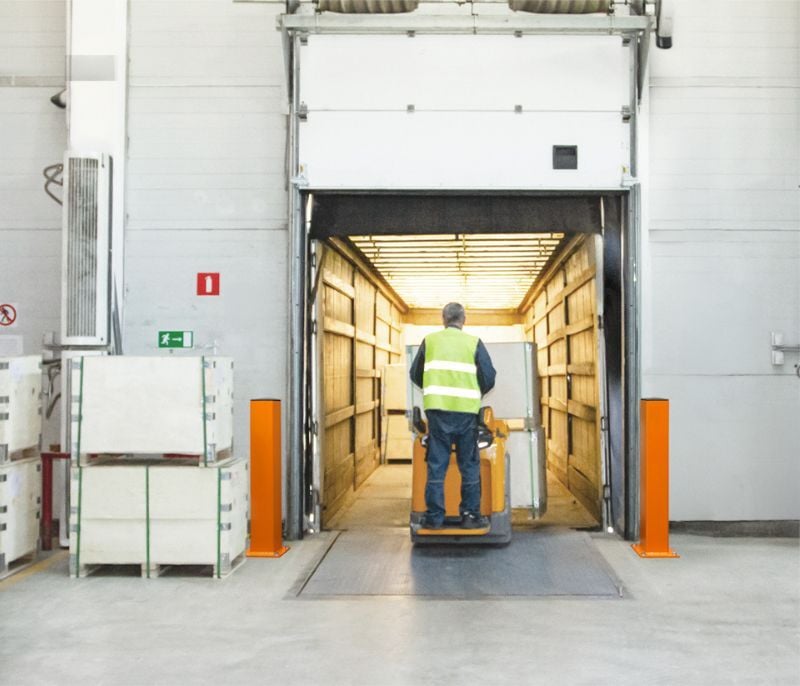
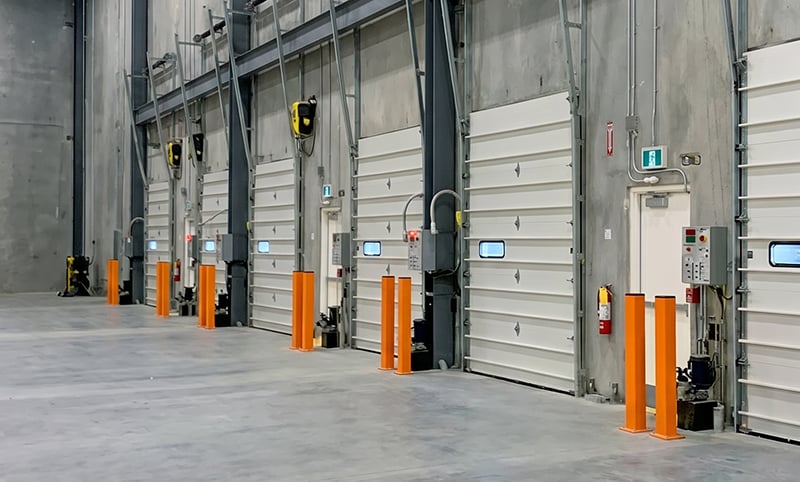
Loading docks concentrate every variable that produces impact: forklifts entering and exiting at angles, dock plates being seated and unseated, trucks backing in, dock seals and bumpers absorbing repeated contact, and dock controls and levelers within easy strike range. OSHA requires sufficient safe clearances for mechanical handling equipment at loading docks, doorways, and turning points, and that aisles be kept clear and in good repair.
Bollards installed flanking dock door tracks and beside dock controls protect the door track, frame, leveler controls, and adjacent walls from forklift mast and counterweight strikes.
2. Pedestrian Walkways, Doors, and Crossings
The point where a person enters a forklift traffic zone is the highest-consequence location in any warehouse. Office-to-warehouse doors, break room exits, time clock locations, visitor entrances, and pedestrian crosswalks across forklift aisles all demand physical separation, not just floor paint.
Bollards in these zones support a layered pedestrian safety system that should also include guardrails for continuous separation along longer paths, mirrors at blind intersections, motion-activated warning lights, and traffic-rule signage. Bollards alone are not a pedestrian safety program. They are one component of a safety system.
A critical caveat: bollards installed near doors must never block egress, restrict accessible routes under the ADA, or interfere with emergency exit clearance.
3. Forklift Battery Charging and Fueling Stations
Often, yes. Forklift battery charging areas contain equipment that should not be struck by industrial trucks. OSHA requires battery-charging installations to include provisions to protect the charging apparatus from damage by trucks, as well as fire protection, electrolyte spill control, and ventilation.
Bollards can help protect chargers, battery-handling equipment, electrical panels, eyewash stations, and nearby infrastructure. In higher-risk areas, guardrails or a more complete barrier system may be preferable to standalone bollards. The right answer depends on the layout, traffic pattern, and equipment being protected.
4. Equipment, Utilities, and Process Lines
Pumps, compressors, control panels, electrical disconnects, gas lines, fire department connections, sprinkler risers, eyewash stations, and HVAC equipment are routinely placed in or beside forklift travel paths. Each one is expensive to repair, dangerous to damage, and capable of shutting down operations for hours or days when struck.
A practical filter: if you can identify a piece of equipment in your facility that has been hit, scraped, or "almost hit" in the last 12 months, it is a candidate for bollard protection.
5. Building Columns and Structural Supports
A struck building column is one of the few impact events that can compromise structural integrity. For standard interior columns in lower-traffic zones, bollards may be sufficient after reviewing the traffic pattern and impact exposure.
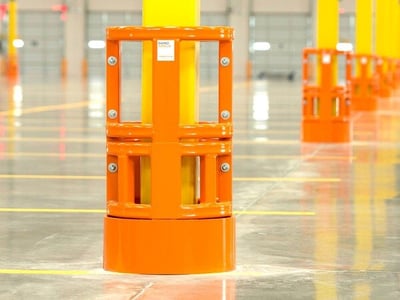 For larger structural columns, high-traffic locations, or columns with repeated impact marks, a dedicated building column protector is often the better solution.
Damotech’s column protector line is purpose-built for this case. Bollards alone protect a small footprint near the column; column protectors protect the column itself.
The key is to match the protection to the impact pattern: bollards for vehicle separation, guardrails for continuous barriers, column protectors for structural columns, and rack guards for pallet rack impact zones.
Where Bollards Are NOT the Right Solution
Bollards are not the right answer for recurring pallet rack damage. If forklifts are repeatedly striking rack uprights, baseplates, end-of-aisle frames, or tunnel-rack frames, you need rack-specific protection, such as column guards, base guards, end guards, frame guards, or aisle guards, engineered for the geometry and load patterns of pallet racking. A bollard placed near a damaged rack upright doesn’t protect the upright. It just sits next to it.
Bollards are also not a substitute for engineered rack repair. A rack upright that has been struck and bent must be either replaced or repaired with an engineered, load-rated repair kit. Bolting a bollard nearby does not restore the structural capacity of damaged steel.
The right protection product depends on what is actually being hit. The wrong product, even installed correctly, gives the appearance of protection without the function, and that gap will be exposed by either the next impact or the next inspection.
Technical Specs That Matter
Anchoring Method
Mechanically anchored (surface-mounted) bollards bolt to the existing slab and can be relocated when layouts change. Embedded (concrete-set) bollards are buried in a poured footing and are permanent. Removable bollards use a sleeve-and-pin or lift-out design intended for routine access; they are a different product for a different purpose.
A mechanically anchored bollard, like the DAMO BOLLARD, can be relocated when layouts change, which suits warehouses that re-slot frequently.
Spacing
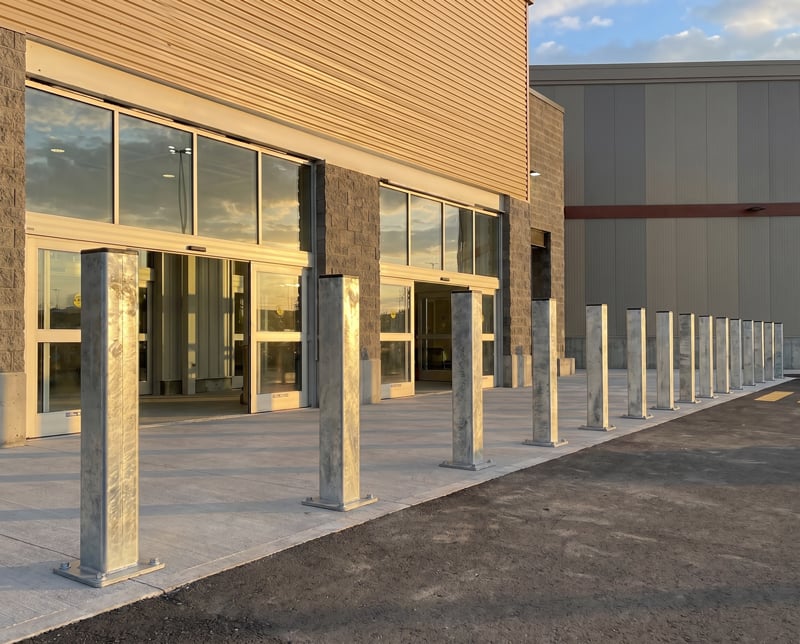
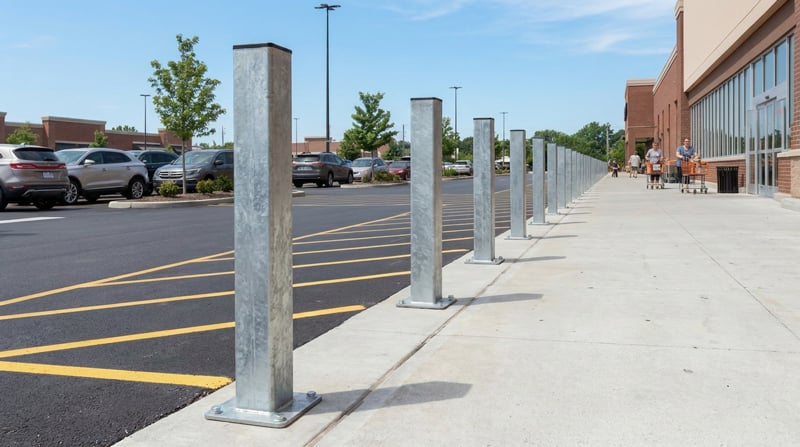
When bollards are installed in a row to help prevent vehicle passage — for example, in front of a storefront or pedestrian zone — many industry guides recommend spacing them about 4 feet on center, or generally within a 3- to 5-foot range, while maintaining required accessible clearances. Wider spacing can allow smaller vehicles to pass between posts.
For point protection around equipment, spacing should be based on the equipment footprint, required service access, vehicle approach path, and site-specific risk, not just a default vehicle-width rule.
Visibility
In a forklift traffic zone, a driver needs to register the bollard early and unconsciously. Powder-coated safety yellow or safety orange remains the warehouse default for that reason. For outdoor, humid, washdown, or cold-storage environments, galvanization protects against corrosion that would otherwise compromise the post and anchor over time.
Does OSHA Require Safety Bollards?
OSHA does not have a universal rule that says "install bollards in every warehouse." It does have several requirements that frequently push facilities toward bollards as the practical answer.
29 CFR 1910.176(a) requires sufficient safe clearances at aisles and loading docks where mechanical handling equipment operates, and that aisles and passageways be kept clear and in good repair.
As seen earlier, 29 CFR 1910.178(g)(2) requires protection of the battery charging apparatus from truck damage.
The General Duty Clause, Section 5(a)(1) of the OSH Act, requires employers to provide a workplace free from recognized hazards that are causing or likely to cause death or serious physical harm. Once a hazard is recognized through near-miss reports, prior incidents, repeated damage, or industry awareness, employers should evaluate practical ways to reduce or eliminate that hazard.
Translation: bollards are not always required by name, but the conditions that require them often are.
How to Inspect Bollards (and What to Do When You Find Damage)
Add bollards to your regular facility safety walk.
- Bent or leaning posts
- Loose or missing anchors
- Damaged baseplates
- Cracked or spalled concrete around the base
- Repeated impact marks
- Reduced visibility
- Rust or coating damage
- Obstructed pedestrian paths
- New traffic patterns that changed the risk
If the same bollard is being hit repeatedly, it may be preventing worse damage, but it is also telling you something important about the layout.
What Mistakes Should You Avoid When Installing Bollards?
Avoid these common problems:
- Installing bollards where rack guards are needed. Rack damage often requires rack-specific protection.
- Blocking egress or pedestrian movement. Protection should not create a new safety hazard.
- Ignoring anchor and floor conditions. A bollard is only as effective as its installation and supporting slab.
- Using low-visibility finishes in high-traffic areas. Drivers need to see the protection early.
- Failing to inspect after impact. A damaged bollard, baseplate, anchor, or slab may need attention.
- Treating all sites the same. A warehouse tunnel, a gas station pump, a parking garage, and a storefront entrance have different impact patterns.
- Assuming a bollard solves the root cause. Repeated impacts may signal a deeper issue with layout, traffic flow, training, lighting, speed, or congestion.
- Using the wrong finish for the environment. Outdoor bollards should be galvanized or otherwise specified for exterior exposure to help resist corrosion from rain, snow, salt, humidity, and washdown conditions.
What Damotech Recommends
The right protection strategy starts with a question that is often skipped: what are we trying to protect, and from what kind of impact?
In Damotech’s experience working with warehouse and DC operators across North America, the strongest impact protection programs combine four things.
- A facility walk that maps every recurring impact zone, every near-miss, and every piece of irreplaceable equipment.
- The right product matched to each zone: bollards for vehicle separation and equipment protection, rack guards for rack damage, building column protectors for structural columns, and guardrails for continuous pedestrian separation.
- Engineered repair when racking has already been damaged, rather than patchwork fixes that leave residual capacity in question.
- A documented inspection cycle that catches degradation before the next impact tests it.
“Bollards are a simple but powerful safety tool. In a warehouse, they shield machinery and structural supports from forklift impacts, saving you a lot in repairs and downtime. And the best part? It’s passive protection. It just works.”
— Dan Bider, Technical Director at Damotech
If your facility has damaged dock doors, exposed equipment, recurring rack impacts, near-miss reports, or a column that’s been hit more than once, the time to address those exposures is now, not after the next incident gives a plaintiff’s attorney a foreseeability argument.
Talk to a Damotech expert to identify which zones in your facility need bollards, rack guards, column protectors, or a different solution entirely. We’ll help specify the right product for each impact pattern.

FAQ About Safety Bollards
Where should safety bollards be installed in a warehouse?

The highest-priority zones are loading dock doors and dock controls, pedestrian entrances and crossings into forklift aisles, forklift battery-charging and fueling stations, exposed equipment and utilities (electrical panels, sprinkler risers, eyewash stations, HVAC), building columns in traffic paths, and high-traffic vehicle routes. A practical test: if something has been hit, scraped, or nearly hit in the last 12 months, it’s a candidate for protection.
Where else are safety bollards used besides warehouses?
Beyond warehouses, bollards protect storefronts, parking lots, fuel pumps, shopping centers, and building corners — anywhere vehicles move near people, structures, or critical equipment. The principle is the same everywhere: if vehicle traffic intersects with something valuable or vulnerable, the impact risk should be assessed.
Are bollards enough to protect pallet racks?
Not always. Bollards can help protect certain rack-adjacent areas, but recurring impacts to uprights, baseplates, end-of-aisle frames, or tunnel rack frames usually require rack-specific protection.
How often should bollards be inspected?
Monthly visual inspection during your routine facility safety walk, plus immediate inspection after any known impact. Look for lean, anchor condition, concrete condition at the baseplate, repeated impact marks, coating damage, and visibility.
Does OSHA require safety bollards?
OSHA does not name bollards universally. It does require safe clearances at loading docks (29 CFR 1910.176), protection of battery charging apparatus from trucks (29 CFR 1910.178), and a workplace free from recognized hazards (General Duty Clause, Section 5(a)(1)). Bollards are often the practical way to meet those requirements.
What should be considered when installing bollards in outdoor or wet environments?
For outdoor, humid, washdown, or cold-storage applications, corrosion resistance is the dominant durability factor. Galvanized bollards hold up far better than powder coat alone under repeated moisture and chemical exposure. Visibility also matters; a bollard hidden by landscaping or blended into the façade defeats its purpose.
What design considerations matter for bollards in retail, parking, or public-facing environments?
In retail centers, parking garages, and other public-access settings, bollards must be strong enough to withstand the risk while also integrating with the building design, pedestrian flow, accessibility requirements, and emergency access. Avoid placements that create trip hazards or restrict emergency egress.