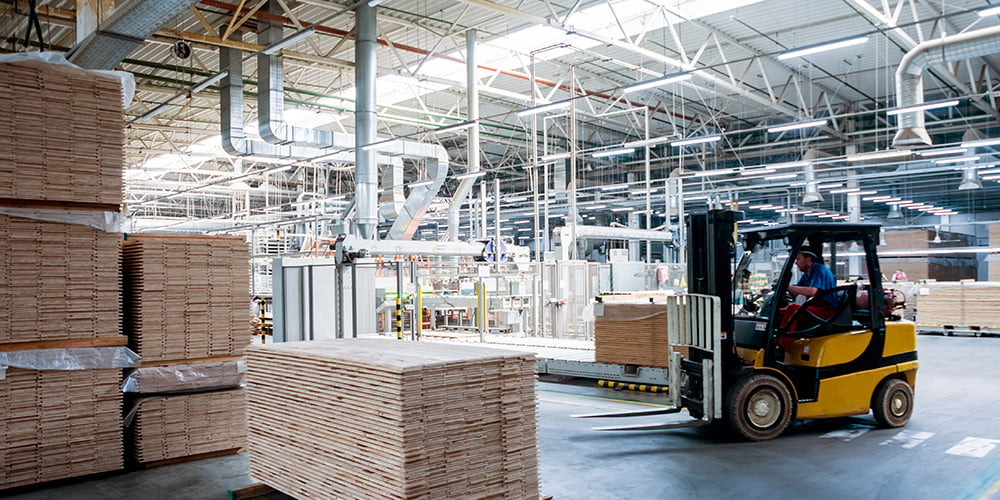

A single forklift hit at the base of an upright rarely stays a dent. It bends the column, reduces the rack’s load-carrying integrity, and can turn a productive bay into a blocked aisle, a repair backlog, or — in the worst case — a collapse risk with pallets overhead. Forklift impact isn’t an occasional nuisance in a busy warehouse; it’s the leading structural threat to your racking.
The ANSI/RMI MH16.1 commentary is direct about it: collisions between forklift trucks — or other moving equipment — and front columns are described as the single most important source of structural distress in storage racks. The commentary’s first suggested safeguard is protective devices that prevent trucks from striking exposed columns.
This is the practical guide to forklift pallet rack protection: which rack guards exist, which one fits which problem, how to prioritize where to protect first, and how to roll out guarding across a site without shutting it down.
Key takeaways
- Forklift impact is the leading structural threat to pallet racking, and most damage lands in the bottom 24 inches of the upright — including the counterweight zone that reversing forklifts strike above floor level.
- A forklift rack guard (also called an upright protector, column guard, or rack protector) absorbs impact before it reaches the column; floor-anchored steel redirects force into the slab instead of the rack.
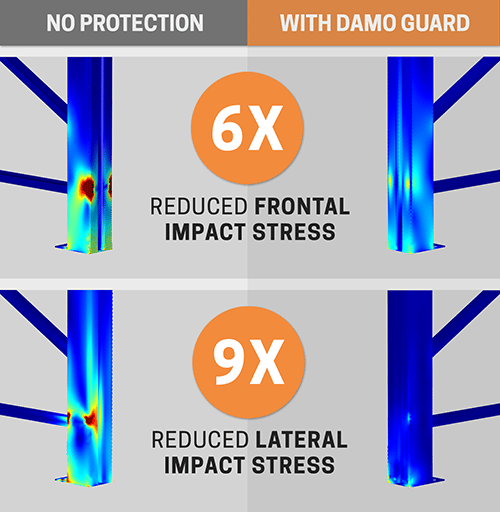
- In a Damotech impact study, DAMO GUARD reduced stress on the front of the column by 6× and on the sides by 9×.
- Match guard height and type to where you’re actually getting hit — a short base guard can’t stop a mid-column counterweight strike.
What is a forklift rack guard?
A forklift rack guard — also called an upright protector, column guard, rack protector, or pallet protector — is a barrier installed at a pallet rack upright to absorb forklift impact before it reaches the column. Steel guards anchored to the floor redirect part of the force into the concrete slab rather than the rack, helping prevent bent uprights, downtime, and collapse risk.
Where forklift impacts hit pallet racks
Most rack damage starts low and works upward. Impacts cluster at the base and in the zone up to roughly 24 inches off the floor, where forks, load corners, and critically the forklift’s rear counterweight strike the column. During backup maneuvers, operators watch the load and forks ahead of them, not the counterweight behind, which makes rear-end impacts to the lower and mid-column especially common.
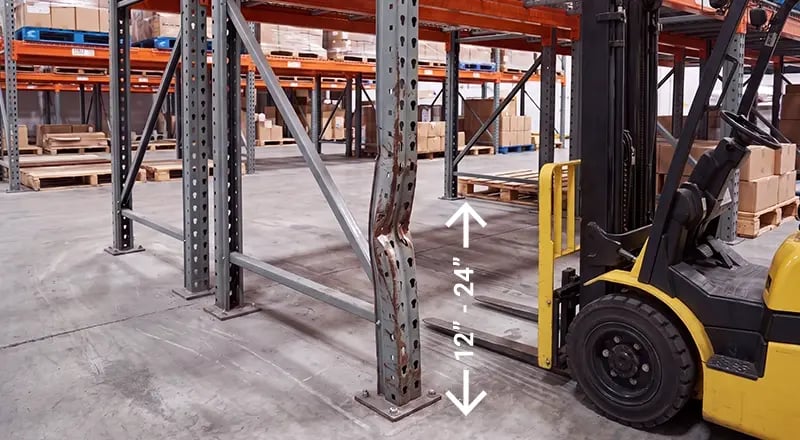
That matters for product selection. A short base protector guards against blade-level contact, but it does nothing to prevent a counterweight from backing into the column a foot or more off the ground. Matching guard height to where you’re actually getting hit is the difference between a guard that works and one that just looks like protection.
That is why rack protection is not just a maintenance preference; it is a recognized warehouse safety practice. OSHA’s warehousing guidance recommends inspecting and maintaining racking to prevent collapse, isolating damaged areas immediately, and installing rack upright guards to help prevent damage from incidental forklift contact. For busy warehouses where forklifts repeatedly strike the same uprights, guarding those hit zones is one of the most direct ways to reduce recurring rack damage, protect stored loads, and support a safer, more audit-ready operation.
Which forklift rack guard fits which impact point
Different failure points need different guards. This quick match covers the products that stop forklift-impact damage at each point on the rack — it’s scoped to impact, not a full product-selection guide.
| Where you’re getting hit | Damotech product | Why this guard |
|---|---|---|
| Front upright, base to mid-column (the lower 24″ high-risk zone) | DAMO GUARD | Front-column coverage to stop counterweight and mid-level hits, not just floor-level contact |
| Column base in low-beam or tight-clearance aisles | DAMO BASE GUARD | Low-profile option that guards the base without blocking floor-level beam connections |
| Outriggers on double-deep racking | DAMO NOSE GUARD | Shields the protruding outriggers that stick into the forklift’s travel path on double-deep systems |
| End-of-row frames, tunnels, drive-throughs, and VNA aisles | DAMO AISLE GUARD | Wraps the front, side, and rear posts of frames exposed on multiple sides in high-traffic, tight-clearance transitions |
| Dock-door frames and staging lanes | DAMO FRAME GUARD | Built for the dock zone — takes repeated hits from forklifts, pallet jacks, and debris |
| Building columns and structural posts | DAMO SHIELD | Redirects impact energy into the floor instead of the building column |
| Doorways, walkways, equipment, and parking zones | DAMO BOLLARD | Heavy-duty steel posts that protect people, machinery, and infrastructure from traffic |
| Pedestrian walkways and larger protected areas | DAMO FENCE | Steel guard fencing that separates people and traffic from racks and equipment |
Choosing between protector types more broadly — beyond forklift impact? See 6 Types of Pallet Rack Protectors: Which to Use and When. For end-of-row designs specifically, see Aisle Guard vs. End Guard: Choosing End-of-Row Protection. This page stays focused on forklift-impact protection.
DAMO GUARD: a 24-inch pallet rack guard built for mid-column hits
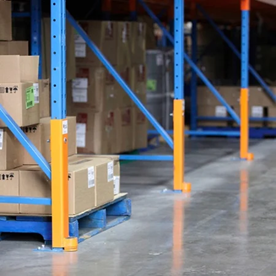 Because so many damaging hits land above the floor line, DAMO GUARD is engineered to protect the front column through the impact-prone zone up to 24 inches — and taller where needed — rather than only shielding the very bottom. A 24-inch pallet rack guard covers the counterweight and reversing impacts that shorter base protectors miss, helping keep a mid-level hit from compromising the column and the loads above it. Twenty-four inches suits most operations; taller profiles are available for layouts with higher or repeated mid-column strikes.
What makes it hold up under repeated impact:
- 3/16″ solid structural steel — built to stay intact under repeated hits rather than deform on the first serious one.
- Bullnose that transfers load to the floor — the front anchor is protected, and part of the impact force is directed into the concrete slab instead of the rack column.
- Powder-coated finish — more resistant to chipping, scratching, and corrosion than spray paint in high-traffic conditions.
- Customizable heights — 24″ suits most operations; other heights are available for specific layouts.
- Measured impact reduction — a Damotech impact study on an upright column found DAMO GUARD reduced stress on the front of the column by a factor of six and on the sides by a factor of nine.
Already have rack damage?
A free rack damage assessment gives you clear next steps on what needs repair. A damaged rack has to be repaired before protection makes sense — so if you're seeing bent uprights or past impact, start here.
→ Get a free rack damage assessment
How to prioritize forklift-impact protection
You don’t need to guard everything at once. Prioritize with a quick walkthrough and your warehouse management data:
- Follow the traffic. The aisles and bays with the most forklift movement and pick-and-place activity take the most hits. Protect those first.
- Start where you’ve already been hit. A previously damaged bay is a marked hotspot; repeat damage there is a prioritization signal, not bad luck.
- Match the guard to the rack type. Drive-in, pushback, pallet flow, selective, and VNA systems expose different points. VNA aisles need non-protruding guards that preserve clearance; drive-in racks need protection at entry points.
- Weigh height and load. Taller racks and heavier or higher-value inventory raise the cost of any single failure, so lower-column protection matters more.
- Check what’s next to the rack. Where conduit or sprinkler lines run alongside uprights, a rack hit can damage systems far more expensive than the rack itself.
Priorities vary by facility, rack type, and layout, so a site-specific assessment is the reliable way to build the plan. (Consider a DAMO PRO repair kit with integrated protection for zones that are already damaged — it repairs and protects in one step.)
When it matters most: peak season. When forklift traffic spikes to meet holiday or surge demand, a single mid-column hit can pull a bay out of service at the worst possible moment, turning your most profitable weeks into repairs, downtime, and lost throughput. Guarding your high-traffic zones before the surge is the cheapest form of insurance against peak-season downtime.
New warehouse or existing one — both benefit
Building new? Specifying protection at install is the lower-cost path. New OEM racking usually ships with bare uprights; guarding from day one preserves new racks and avoids the first cycle of impact damage.
Already operating? Add protection incrementally — highest-traffic and previously damaged zones first, then expand in phases against budget. Documented, targeted guarding also supports audit readiness by showing reasonable steps were taken to reduce impact risk.
What makes a steel forklift guard hold up
Not all guards are equal. Damotech’s protection uses structural steel built for repeated heavy impact, anchored so force transfers into the concrete rather than back into the column — the opposite of a guard bolted only to the rack, which passes the hit straight into the part you’re trying to protect.
Deciding between steel, plastic, and other materials? See the full breakdown in 4 Types of Structural Column Protectors: Which Material Wins.
What happens next
- Already have rack damage? Start with a free damage assessment to get clear next steps on what needs repair. Damaged racks have to be repaired before protection makes sense, so this comes first.
- Ready to protect? Talk to a rack safety expert. They’ll help you prioritize your high-impact zones and match the right guard to where you’re actually getting hit.
- Roll it out in phases. Repair what’s damaged, then protect the exposed zones — scoped to your budget and schedule.
Frequently Asked Questions About Forklift Pallet Rack Protection
What products protect warehouse racking from forklift damage?

Damotech’s protection line covers the main impact points, including DAMO GUARD (front column), DAMO BASE GUARD (low-profile base), DAMO NOSE GUARD (double-deep outriggers), DAMO AISLE GUARD (end-of-row and tunnel), DAMO FRAME GUARD (dock-door areas), and DAMO SHIELD (building columns and structural elements).
Is a 24-inch pallet rack guard better than a short base guard?
They do different jobs. A short base guard covers blade- and floor-level contact; a 24-inch pallet rack guard also covers the 12-to-24-inch counterweight zone where reversing forklifts do the most hidden damage. If your hits come from backups and mid-column strikes — most do — the taller guard prevents damage a base guard can’t reach.
What are the best forklift guards for pallet racking?
The best forklift guard depends on where the rack is getting hit. For the front column through the counterweight-impact zone, a taller front guard (24″ or more) does the most; for tight aisles, a low-profile base guard; for outriggers, aisle ends, and dock doors, purpose-built guards for each. Match the guard to your actual impact points rather than defaulting to one type everywhere — the table above shows which fits which.
How tall should a rack guard be?
Because many hits land at counterweight height rather than at the floor, guard height should match where you’re actually getting struck. A 24″ guard covers the most common impact zone for most operations; taller profiles suit layouts with higher or repeated mid-column hits.
Will installing guards require unloading racks or shutting down aisles?
Many installations can be staged with rolling aisle closures and minimal unloading. Sequencing around dock waves and peak pick windows helps maintain service levels; the right approach depends on your layout.
How do guards fit into an OSHA/NEP readiness plan?
Guarding is the prevention layer, working alongside baseline and periodic third-party audits, documented internal inspections, and corrective action on damage found. Targeted guarding in known high-risk zones helps reduce recurring hazards. (Specific regulatory requirements vary by jurisdiction and facility; confirm what applies to your site.)