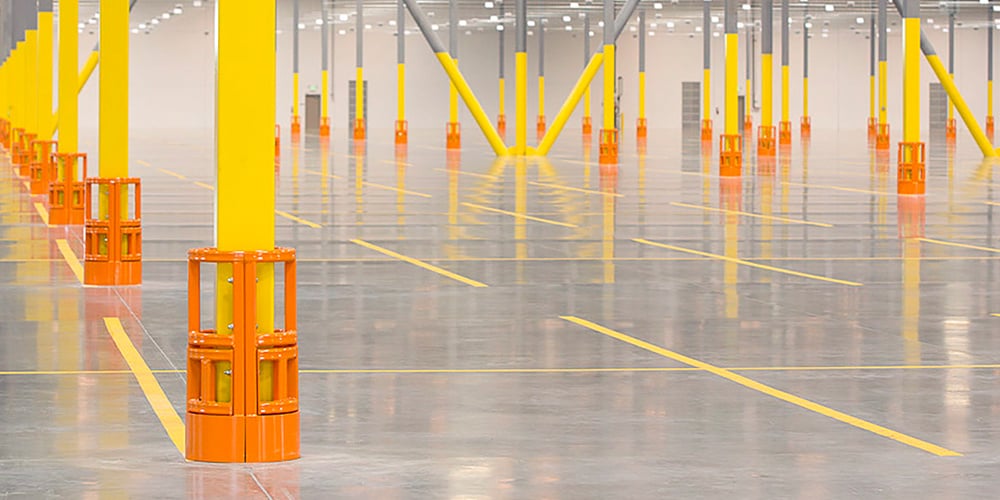

Quick answer: The four structural column protector materials are plastic, concrete, rubber/foam, and steel. Floor-anchored steel (like DAMO SHIELD) is the most reliable for high-traffic, high-impact zones because it redirects impact into the slab instead of the column — plastic, concrete, and rubber all transfer force back into the structure or risk damaging the vehicle.
Warehouses are busy places — forklifts, inventory, and people all moving at speed. In that environment, the structural columns holding up the building fade into the background until a forklift finds one. Widely cited forklift-safety figures put the share of lift trucks involved in an accident each year at close to one in ten, and a meaningful number of those incidents involve impacts with fixed columns.
A collision with a structural column isn’t just expensive — it’s dangerous. Damage to a building column is far more serious than damage to a pallet rack upright, because a building column carries the roof and the floors above it, not a single bay of product. Training and traffic rules help, but physical protection is what stands between a rushed maneuver and a compromised structure.
This guide covers the four common ways to protect a structural building column — plastic, rubber/foam, concrete, and steel — with the pros, cons, and best-fit zones for each, so you can decide which material actually wins for your facility.
Protecting pallet rack uprights instead of building columns? Those are a different problem with different products. Start with 6 Types of Pallet Rack Protectors: Which to Use and When. This article is specifically about the free-standing structural columns that hold up your building.
Quick answer
- A structural column protector shields a building’s load-bearing column from forklift impact so the column keeps the integrity it was engineered to have.
- There are four common materials: plastic guards, concrete bases, rubber/foam wraps, and standalone steel protectors.
- Plastic, rubber, and concrete solutions all share one weakness: they either transfer impact energy into the column or risk damaging the vehicle.
- A standalone steel protector anchored to the floor (such as DAMO SHIELD) is the only option that redirects impact into the slab instead of the column — the most reliable choice for high-traffic, high-impact zones.
- Match the material to the traffic and impact level of the zone; the highest-risk locations justify floor-anchored steel.
What is a structural column protector?
A structural column protector is a barrier installed around or in front of a load-bearing building column to absorb or deflect a forklift impact. The goal is to keep collision force from reaching the column, because damage that bends, cracks, or pierces a structural column reduces its capacity to carry the loads above it. The materials differ in how they manage that force — and that difference is what separates a protector that safeguards the structure from one that simply passes the hit along.
Why structural column damage is so serious
Material-handling vehicles damage columns in a few predictable ways, and each carries a different level of risk.
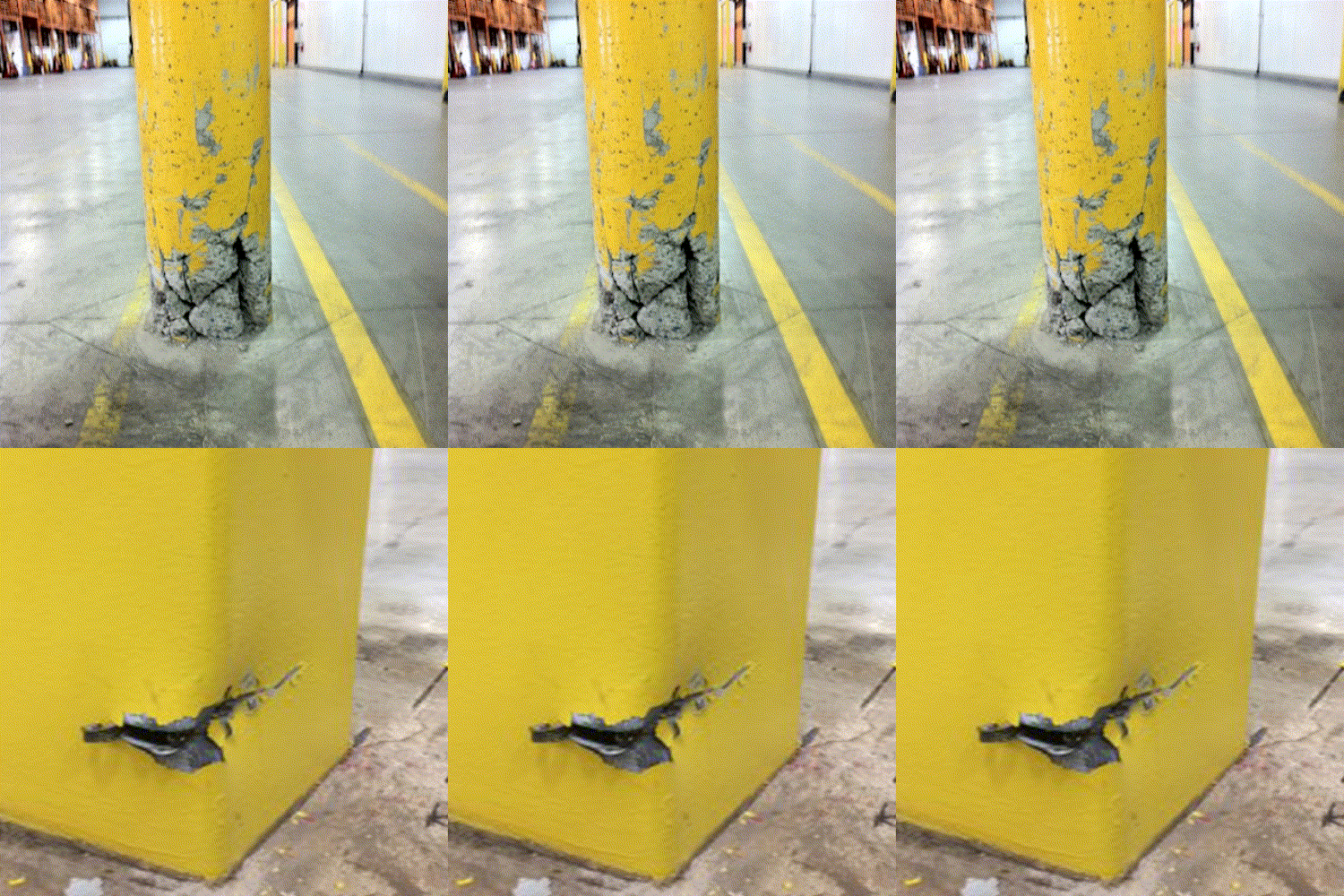
Grazed or chipped concrete. Tight aisles turn driving around a column into a precision task, and glancing contact is common. A graze can look harmless, but surface damage left unaddressed can worsen over time into a more serious structural problem.
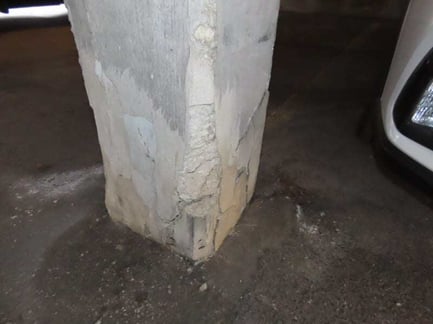
Bent steel. In a collision between a steel column and a loaded forklift, the column loses. A slight bend changes how the column carries load, and case studies have linked a single bent column to a progressive, domino-style failure.
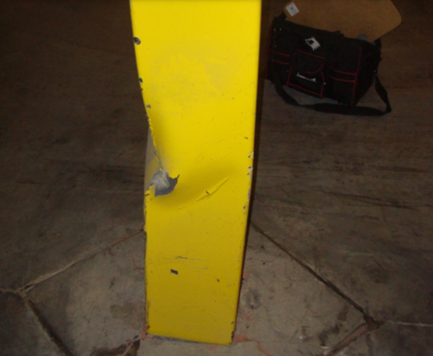
Pierced columns. Less common but more dangerous: forks can puncture or shear a steel column in a hard hit. A pierced column loses strength immediately and introduces the risk of crack propagation — generally a higher-risk condition than a bend, and one that needs prompt attention.
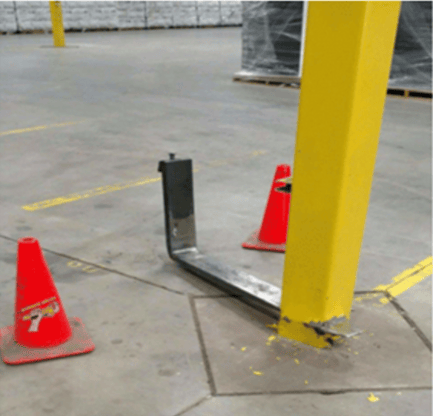
The takeaway: because a building column supports far more than a rack bay, the case for real protection in exposed locations is strong.

The 4 types of structural column protectors
Here are the four materials, how each handles impact, and where each fits.
1. Plastic column guard
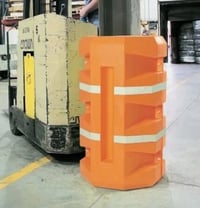 Molded casings, usually high-density polyethylene (HDPE), shaped to fit standard columns and secured with straps or Velcro. Some include impact sensors or alarms to alert drivers. They suit low-traffic areas and low-speed grazing.
Photo credit: Plastic column protectors
- Strengths: regain shape after minor impacts, bright colors improve visibility, low cost, easy install.
- Drawbacks: limited to standard shapes with little customization, little resistance to piercing or heavy hits, and — because they attach directly to the column — they transfer impact energy straight into it.
2. Concrete column base
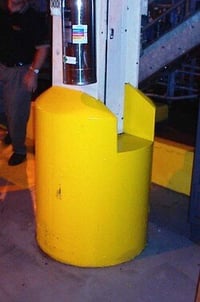 A pre-molded concrete block used as a base, or concrete molded around an installed column. Concrete’s high inertia and compression strength make it effective against many collisions.
Photo credit: Concrete wrap
- Strengths: strong resistance with some piercing protection, minor damage is repairable, and in some cases it can add to the column’s capabilities.
- Drawbacks: bulky and space-consuming, complex install, hard to replace (damaged concrete has to be chipped away), a higher risk of damaging the vehicle because it barely deforms, and lower resistance to seismic forces unless specifically designed for them.
3. Plastic or rubber column wrap
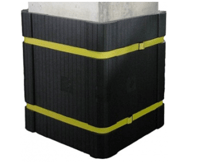 Sleeves of industrial rubber or a foam-like expanded polypropylene (EPP) under a protective cover, wrapped around solid columns. Common in parking garages and tight, high-traffic spaces, and often used on concrete columns to guard against grazing and chipping.
Photo credit: Protection wrap
- Strengths: good against grazing and chipping, simple install, bright colors improve visibility.
- Drawbacks: minimal impact protection, unsuitable for high-risk areas, and no barrier to force transfer — the impact still reaches the column.
4. Standalone steel column protectors
Steel column protectors are robust barriers anchored into the floor around a column rather than strapped to it. Because a steel protector stands on its own, it disperses impact energy into the ground instead of relying on or loading the column itself. That single mechanical difference is what separates steel from the other three materials: plastic, rubber, and concrete sit against the column and send force back into it, while a floor-anchored steel protector keeps the hit out of the structure entirely.
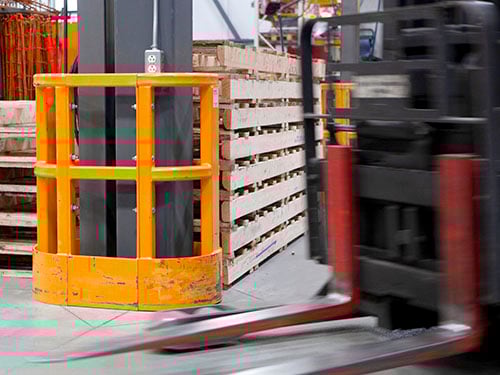
Being independent of the column’s shape, steel column protectors can be made to order for a wide range of column sizes, with extra reinforcement in the gaps to resist piercing. They can cost more upfront than a plastic guard and require proper floor anchoring, but they last through repeated impacts, don’t degrade like polymer, and can be relocated when a layout changes — which is why they’re the recommended choice for the high-traffic, high-impact zones where columns actually get hit.
- Strengths: high impact resistance, wide customization, impact energy channeled to the floor, longer-lasting and more reliable than plastic systems.
- Drawbacks: higher upfront cost than plastic, requires floor anchoring, takes more space than a wrap.
DAMO SHIELD is Damotech’s all-steel, free-standing structural column protector in this category.
Warehouse column protection: matching material to impact zone
Effective warehouse column protection isn’t about picking one product for the whole facility — it’s about matching the material to what each column actually faces. A quiet corner column and a column beside a dock door have completely different impact exposure, and the right column protection reflects that. Use plastic guards or wraps for low-traffic, low-speed zones where grazing is the main risk, and step up to floor-anchored steel for forklift lanes, dock approaches, and any column with a history of contact. The checklist below walks through how to make that call column by column.
Side-by-side: which material wins?
| Material | How It Handles Impact | Customization | Best-Fit Zone | Main Weakness |
|---|---|---|---|---|
| Plastic guard | Absorbs light hits but transfers force to the column. | Low; generally limited to standard shapes. | Low-traffic, low-speed areas. | Can fail under heavy or piercing impacts. |
| Concrete base | Uses high inertia and barely deforms during an impact. | Can be molded to fit different shapes. | Moderate-impact, non-seismic areas. | Bulky, difficult to repair, and may damage vehicles. |
| Rubber or foam wrap | Cushions light contact and grazing impacts only. | Low. | Garages and tight, low-impact spaces. | Does not provide meaningful protection against direct impacts. |
| Standalone steel | Redirects impact forces into the floor rather than the protected structure. | High; can be manufactured to order. | High-traffic, high-impact areas. | Higher upfront cost and requires proper floor anchoring. |
The pattern is clear: plastic, rubber, and concrete each protect in narrow conditions, but the first three either send the impact back into the column or risk damaging the vehicle. Only a floor-anchored steel protector keeps the force out of the structure entirely.
How to choose the right structural column protector
Work from the conditions at each column rather than a single default:
- Traffic and impact level. Low-traffic, low-speed spots can get by with plastic or a wrap. Forklift lanes, dock approaches, and any column with a history of contact call for floor-anchored steel.
- Column type and shape. Odd shapes or non-standard sizes favor a made-to-order steel protector, since molded plastic fits standard columns only.
- Vehicle protection. Where you also want to spare the forklift, avoid rigid concrete, which barely deforms on contact.
- Seismic exposure. In seismic zones, concrete needs to be specifically engineered for those forces; a standalone steel protector avoids adding rigid mass to the column.
- Parking garages and public spaces. Wraps handle scuffs and visibility; a standalone guard is better where vehicles move faster or heavier.
Because a building column’s capacity is site-specific, confirm high-risk columns with an engineer or rack safety specialist before finalizing a plan.
Conclusion: which structural column protector wins?
Not every solution offers the same protection. Plastic wraps and polymer sleeves provide light protection but ultimately pass impact energy into the very column they cover — which can still lead to structural damage, costly repairs, and added risk. Concrete resists well but is bulky, hard to repair, and can punish the vehicle.
A standalone steel protector like DAMO SHIELD is fully independent of the column. Anchored to the floor, it absorbs and redirects impact energy into the ground, preserving the structural integrity of the building. Its robust build, customization, and longevity make it the most reliable choice for the zones where columns actually get hit.
Let’s protect what holds the roof over our heads. See the DAMO SHIELD structural column protector, or explore Damotech’s full protection and guarding line to build coverage across your facility.

Frequently Asked Questions About Structural Column Protectors
What is the best material for structural column protection?

For the high-traffic, high-impact zones where columns actually get hit, a floor-anchored steel protector is the most reliable material — it redirects impact energy into the slab instead of into the column. Plastic and rubber wraps suit low-impact areas and scuffing, and concrete resists heavy hits but is bulky, hard to repair, and can damage the vehicle.
What is the best warehouse column protection?
For high-traffic warehouse zones — forklift lanes, dock approaches, and any column with a history of impacts — the most reliable warehouse column protection is a floor-anchored steel protector that redirects collision force into the slab instead of the column. Match the material to each column’s actual traffic and impact level rather than defaulting to one product across the facility.
Steel vs. plastic column guards — what's the difference?
Think of plastic and polymer guards as visibility and scuff protection, and heavy-gauge floor-anchored steel as impact management. In forklift lanes, docks, and tight-traffic zones, steel channels collision energy into the floor. Plastic helps with light abrasion and alerting but still transfers most of the force into the column and can crack or deform under repeated hits.
How do you protect a structural building column from forklifts?
Match the protection to the zone. In low-traffic spots, a plastic guard or wrap improves visibility and handles grazing. In high-traffic or high-impact areas, install a standalone steel protector anchored to the floor so the column never takes the load of a collision.
Do plastic column wraps actually work?
For grazing, chipping, and visibility in low-speed areas, yes. They're not built for hard or repeated impacts, and because they sit directly on the column, they don’t stop force from reaching the structure. Reserve them for genuinely low-risk locations.
Does concrete column protection hold up in seismic zones?
Only if it’s specifically engineered for seismic forces. Standard concrete bases can be more prone to cracking during earthquakes and add rigid mass at the column. Where seismic performance matters, a standalone steel protector avoids loading the column directly.
Can you protect columns in a parking garage?
Yes. Rubber or foam wraps are common in garages because they cushion grazing and improve visibility in tight, low-speed spaces. Where vehicles move faster or heavier, step up to a standalone steel protector.
How are structural column protectors different from pallet rack protectors?
Structural (building) columns hold up the building; pallet rack uprights hold up a single bay of product. Building-column damage is more serious and calls for free-standing protection like DAMO SHIELD. For guarding rack uprights, end-of-aisle frames, and docks, see 6 Types of Pallet Rack Protectors: Which to Use and When.
How much do structural column protectors cost?
Structural column protector cost depends on the material, column size, quantity, and installation. Plastic guards and rubber wraps are the lowest upfront but wear out and transfer impact into the column. Concrete bases sit mid-range but are install-heavy and hard to repair. Floor-anchored steel protectors like DAMO SHIELD have the highest upfront cost and the lowest lifetime cost — they absorb repeated impacts without transferring damage to the column, so they help avoid far more expensive structural column repairs down the line. For an accurate figure, request a quote based on your column dimensions and zone count.
Is a column shield the same as a column protector?
Yes — "column shield" is a common name for a structural column protector, a barrier installed around or in front of a load-bearing column to absorb or deflect forklift impact. The strongest type is a free-standing steel shield anchored to the floor, such as DAMO SHIELD, which stands independent of the column and channels impact energy into the slab rather than into the structure it protects.
Reference List:
- KIM, Yongwook. WANG, Qian. (2022). Strength evaluation of steel columns significantly deformed due to manmade or natural disasters. https://cloud.aisc.org/SSRC/2022/Kim_Wang_SSRC_2022_submitted.pdf
- ABDEWAHED, B. (2019). A review on building progressive collapse, survey and discussion. ScienceDirect. https://www.sciencedirect.com/science/article/pii/S2214509519300993
- MAKOOND, N., SETIAWAN, A., BUITRAGO, M., & ADAM, J. M. (2024). Arresting failure propagation in buildings through collapse isolation. PubMed Central. https://doi.org/10.1038/s41586-024-07268-5
- JOSHUA GONZALES, C. (2024). OSHA Forklift Accident Statistics & Facts You Need to Know. Warehousewiz. https://warehousewiz.com/blogs/news/osha-forklift-accident-statistics
- (2022). The Pros And Cons Of Different Building Column Protector Styles. Material handling safety. https://materialhandlingsafety.org/the-pros-and-cons-of-different-building-column-protector-styles/
- FARIDMEHR, I., & HAJMOHAMMADIAN BAGHBAN, M. (2020). An Overview of Progressive Collapse Behavior of Steel Beam-to-Column Connections. Applied Sciences, 10(17), 6003. https://doi.org/10.3390/app10176003
- Choi, M., & Lee, C. (2022). Seismic Behavior of Existing Reinforced Concrete Columns with Non-Seismic Details under Low Axial Loads. Materials, 15(3), 1239. https://pmc.ncbi.nlm.nih.gov/articles/PMC8840738/