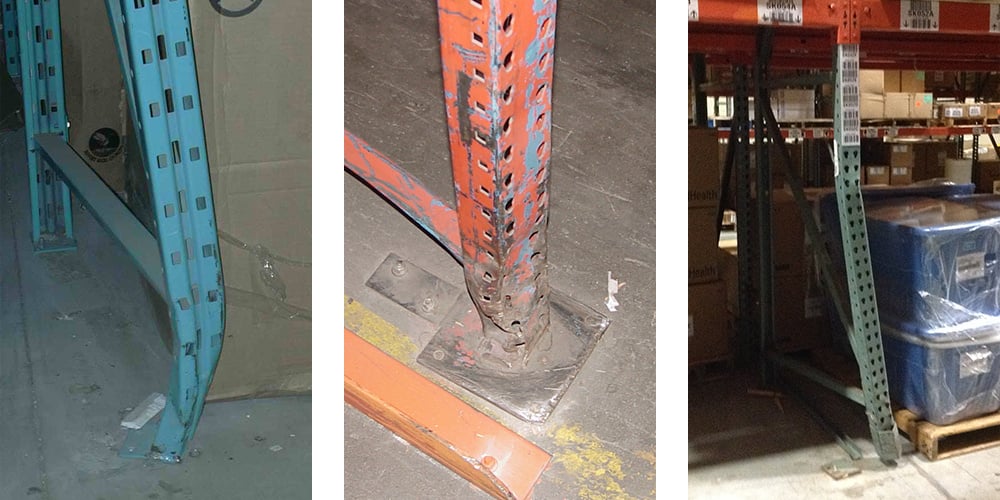

Pallet rack footplates — also called base plates or foot plates — sit at the bottom of every upright column and anchor the entire racking system to the floor. They may look like a small component, but a damaged footplate can compromise the structural integrity of the whole rack, leading to instability, out-of-plumb uprights, or, in severe cases, collapse.
This guide explains what a pallet rack footplate does, how footplate and base plate damage happens, and how to repair or protect this critical component before it becomes a bigger problem.
What Is a Pallet Rack Footplate?
A pallet rack footplate — sometimes called a pallet racking footplate — is the steel plate welded or bolted to the bottom of an upright column. It anchors the column to the concrete floor with anchor bolts and spreads the column’s load over a wider surface area than the column alone could bear.
Footplate, Base Plate, Foot Plate, Racking Feet — Are They the Same Thing?
Yes. These terms all describe the same component; the one your team uses usually comes down to region, manufacturer, or habit. Here’s how the terminology breaks down:
| Term | What It Refers To |
|---|---|
| Footplate | Standard industry term for the plate at the base of an upright column. |
| Base plate | Same component, also written as racking base plate; more commonly used in engineering and structural contexts. |
| Foot plate | Same component, written as two words. Common in casual or regional usage. |
| Racking feet/rack feet | Same component, sometimes also used loosely to describe the base-of-column assembly, including shims. |
For the rest of this guide, we’ll use "footplate" and "base plate" interchangeably, since both terms refer to the same part.
5 Reasons Pallet Rack Footplates Are Important
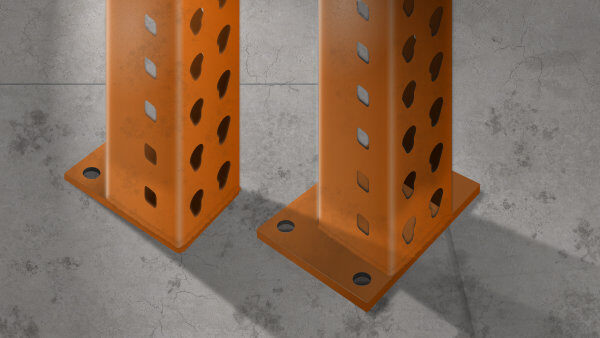
As the name suggests, a footplate sits at the base of a racking system. As a pallet racking system comprises vertical stacks of goods, stabilizing it is paramount. Footplates sit at the bottom of a racking system, holding it firm to the ground. They also boost the overall stability of the rack by serving as the anchor point. The columns are attached to the floor by bolts that go through these footplates.
A pallet rack footplate serves several key functions:
- Distributes column loads over a larger area.
- Provides a connection surface to anchor uprights to the floor.
- Allows the placement of shims to keep the racking system plumb, as deviations from plumb can compromise stability.
- Keeps the racking system in place during seismic events, which can cause warehouse racking to collapse.
- Designed to resist forces at the base of columns (along with anchors).

A Key Risk Factor for Your Warehouse Racking System
A damaged pallet rack footplate can put your pallet rack system at risk. A weakened baseplate compromises the overall stability of the system.
A strong baseplate helps keep the system’s structure intact upon collision, reducing the risks of critical occurrences like collapses. Pallet rack footplates also serve to transfer the load to the ground, keeping the entire racks in place.
How Shims Affect Pallet Rack Footplate Performance
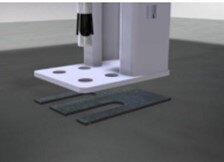
Pallet rack shims are steel plates placed under a pallet rack footplate, base plate, or pallet racking base plate to help compensate for uneven concrete floors. In a footplate inspection, shims matter because shifted, missing, undersized, or improper shims can affect rack plumbness and prevent the base plate from sitting properly on the floor.
For detailed guidance on shim sizing, material, placement, stacking, and installation practices, read our full pallet rack shim guide.
How to Diagnose Pallet Rack Footplate Damage
Before evaluating specific types of footplate damage, use this pallet racking inspection checklist to identify the most common warning signs found during routine rack inspections.
Pallet Rack Footplate Inspection Chart
Use this quick reference to identify common pallet rack footplate and base plate issues during routine rack inspections.
| What you see | What it may mean | What to do |
|---|---|---|
| Bent or twisted footplate/base plate | Possible forklift impact or column-base distortion | Flag for qualified inspection |
| Missing, loose, or sheared anchor at the footplate | Reduced restraint at the column base | Inspect promptly and consult the rack drawings or anchor guide |
| Shifted, missing, or undersized shims under the base plate | Rack may be out of plumb or load may not transfer evenly | Correct the shimming according to the engineer’s or manufacturer’s guidance |
| Rust near welds or anchor holes | Possible loss of steel section or weakened connection | Assess corrosion severity |
| Cracked concrete near anchor | Anchor performance may be compromised | Review slab and anchorage condition |
| Sheared weld between column and footplate | Column-base connection may be compromised | Remove from normal use until assessed |
Need more information about anchoring or shimming? Read our complete guides to pallet rack anchors and pallet rack shims.
Note: This chart is a field reference only. Final repair, replacement, anchoring, or shimming decisions should follow the rack manufacturer’s documentation, engineered drawings, and a qualified rack safety assessment.
1. Impact Damage
Impact from forklifts is the primary source of damage to footplates. It is essential to inspect for impact damage of this type regularly, monthly, or quarterly, depending on the size of your warehouse. Look for deflection caused by impacts. Deflection is where the anchor plate is twisted or pushed back from its correct square alignment. As always, ANSI/RMI MH16.1 standards, published by the Rack Manufacturers Institute (RMI), recommend that a qualified inspector perform official inspections of all damage.
2. Exposure to Corrosion and Rust
Over time, the properties of many metals tend to degrade. These degradations include appearance, loss of strength, and increased permeability to different gases and liquids. This degradation is known as corrosion.
Corrosion occurs when metal is exposed to external environmental factors like acids, bases, water, oils, and other chemicals in solid or liquid forms. Like every metal component, footplates are vulnerable to corrosion, especially in rugged industrial environments where the above-mentioned factors are present in abundance.
Rust is a type of corrosion that’s specifically tied to the oxidation of iron or its alloys. When exposed to oxygen and moisture, iron and its alloys form a reddish-brown substance called rust. Rusting might start from one segment of the metallic piece and eventually spread to disintegrate the entire component.
Footplates made of iron and its alloys could degrade in quality because of rust over time due to prolonged exposure to moisture. A racking system’s overall strength and integrity might diminish tremendously if a major portion of the footplates suffers from rust or any other form of corrosion. Take note of any missing paint or covering of the steel.
3. Damaged Anchor Holes
The holes in the pallet rack footplates where the anchors are secured can become damaged over time due to impact, corrosion, or other factors. When inspecting column baseplates, it’s essential to analyze the condition of these anchor holes to ensure they are in good condition. Baseplates with damaged anchor holes should be replaced. During repair, it is advised to install the anchors in an alternative hole to ensure the proper installation of the new anchor.
4. Concrete Slab
Pallet rack footplates are anchored to a concrete slab to distribute the load and ensure the stability of the entire racking system. The quality of the concrete slab beneath the baseplate plays an important role in the performance of your racking system.
It is important to ensure that the concrete slab in your warehouse is designed to support the loads being applied. Over time, the floor underneath the baseplates can settle, causing rack performance issues. Concrete can also be damaged locally, causing anchoring issues or out-of-plumb uprights. As the foundation that supports your racks, it is important to ensure the concrete slab beneath the baseplates is in good condition.
5. Seismic Forces
As the integrity of a pallet racking system is linked to the pallet rack footplates, it is important to follow the rack manufacturer’s recommendations regarding baseplate size and thickness.
Warehouses situated in zones of high seismic activity have uprights that are typically designed to have larger, thicker baseplates. Depending on the geographical location of your facility, seismic forces can vary. RMI recommends consulting a professional engineer who is familiar with the design and construction of pallet racks to ensure that you have suitable racking components in your facility.

6. Anchor Bolt Issues at the Footplate
Anchor bolts help secure the pallet rack footplate or base plate to the concrete slab. During a footplate inspection, look for missing, loose, damaged, or sheared anchors, as well as cracked concrete or damaged anchor holes around the base plate.
This section focuses on visible anchor-related warning signs at the footplate. For detailed guidance on pallet rack anchor types, quantity, placement, embedment, and installation requirements, read our dedicated pallet rack anchor guide .
7. Sheared Welding Damage
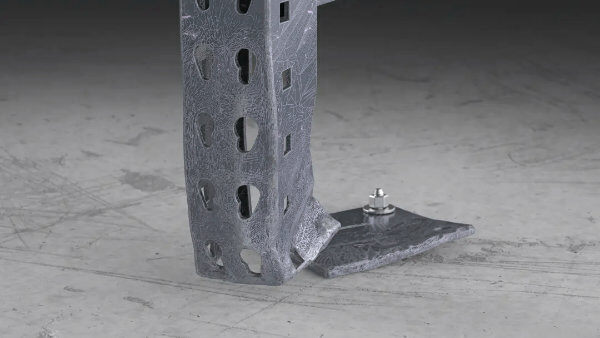
Welds connecting the footplate to the column can be sheared off entirely or partially. For this reason, it is important to look out for this type of damage. Pay special attention when inspecting for damage to the weld points on your footplates for corrosion and shearing.

Practical Solutions for Pallet Rack Footplates
To keep your racking system intact:
- Have footplates and the racking system inspected routinely, depending on your warehouse’s use patterns and conditions.
-
Be sure to check front and back footplates and move materials if they obstruct your view.
-
Ensure professional inspections are done to ANSI/RMI MH16.1 standards by an experienced inspector.
- Ensure all required anchors are present and installed according to the rack manufacturer’s or engineer’s drawings.
- Ensure the concrete slab in your warehouse can support the applied loads. If you are unsure or if the loads have changed, it’s advisable to contact a professional engineer.
- When repairing or replacing an upright, ensure the proper baseplate size and thickness are used for your facility’s location.
Act Now: Rack Repair and Protection to Prevent Future Failures
Another way to prevent pallet rack footplate damage in key high-traffic areas is to use Damotech pallet rack guards. These protection solutions surround your footplates with solid steel independently anchored to the concrete floor. The impact will be diverted and absorbed by the end of the aisle guards or the column guards. This is a solid strategy to keep your warehouse running to maximum efficiency and reduce the need for repairs. Our experts can help you lay out a plan for protecting your warehouse.
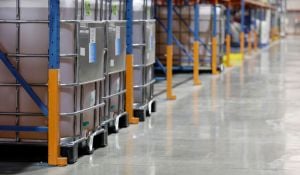
Don’t put off the inspection and repair process before it is too late. Make rack repair and inspection a routine part of your warehouse operations. At Damotech, our experts are here to help you safeguard your warehouse. If you need more clarification about the state of your footplates or need professional guidance, feel free to contact us.
Frequently Asked Questions About Pallet Rack Footplates
What is a pallet rack footplate?

Is a footplate the same as a base plate?
What is a pallet rack foot plate used for?
What are pallet racking feet?
Why are shims used under a rack base plate?
How do you repair a damaged footplate or base plate?