
Key takeaways
- Rack safety involves several operational roles, while the employer retains its applicable workplace-safety duties.
- Rack owners should keep load-capacity and configuration documentation current, arrange regular inspections, and ensure racks are operated within approved conditions.
- Configuration changes, structural damage, and missing documentation often require engineering review.
- Employee training and clear reporting procedures help prevent small issues from becoming major safety risks.
As an engineer, I spend much of my time reading, applying, and interpreting the North American standards used to design industrial pallet rack systems. Warehouse owners and managers rarely have the same opportunity. Rack owners are rarely exposed to these documents and are often unaware of the range of responsibilities they carry. Once a rack is installed, however, many of the decisions that determine whether it remains safe are no longer made by the engineer—they're made every day on the warehouse floor.
That is why understanding your responsibilities as a rack owner is so important.
In the United States, employers are required to provide a workplace free from recognized hazards. When pallet racking is overloaded, altered outside an approved configuration, left with unresolved structural damage, or used outside its intended application, it can increase the risk of employee injury, product loss, and operational disruption.
This article summarizes the primary responsibilities of pallet rack owners based on industry standards such as ANSI MH16.1 and years of engineering experience working with warehouse operators throughout North America. Consider this article a practical starting point for building a safer warehouse and a stronger rack safety program.

Who Is Responsible for Pallet Rack Safety?
Ultimately, the employer is responsible for providing a safe workplace, but pallet rack safety is rarely the responsibility of one individual.
Warehouse managers, operations leaders, maintenance personnel, forklift operators, safety professionals, and qualified engineers all play different roles in maintaining a safe racking system. The rack manufacturer, system designer, and qualified engineering professionals establish the approved configurations and load capacities. Once the system is installed, the employer or rack owner is responsible for ensuring it is used, maintained, inspected, and documented in accordance with the approved design and applicable requirements.
Effective rack safety programs clearly define who is responsible for each part of the process—from reporting rack damage to approving rack configuration changes—so nothing falls through the cracks.
Looking for an inspection form instead?
Download Damotech’s Pallet Rack Inspection Checklist.
Pallet Rack Load Capacity

Load capacity refers to the maximum load permitted for a pallet rack system under a specific approved configuration and set of design conditions. Knowing and displaying your pallet rack load capacity is one of the most important responsibilities of a rack owner because many loading, storage, and configuration decisions depend on it.
Below are some responsibilities directly related to rack load capacity.
- Clearly display rack load capacities and ensure operators understand them.
- Make sure the warehouse slab and subgrade adequately support rack loads.
- Never exceed the maximum permissible load during normal operations.
- Use and maintain racks according to their intended application.
- Retain current Load Application and Rack Configuration (LARC) drawings and other engineering documentation establishing load capacity.
- Ensure any rack configuration changes are reviewed by a qualified rack engineer and reflected in updated LARC drawings.
- Use structurally sound pallets appropriate for the rack system and stored products.
Load capacity isn't something you calculate once and forget. Whenever beam elevations change, storage levels are added or removed, pallet weights change significantly, or racks are relocated, the original engineering assumptions may no longer apply. Keeping load capacity information accurate is a shared responsibility between warehouse management and qualified rack professionals.
Related reading: Learn how pallet rack load capacities are calculated and documented by professional engineers.

How to Address Rack Damage
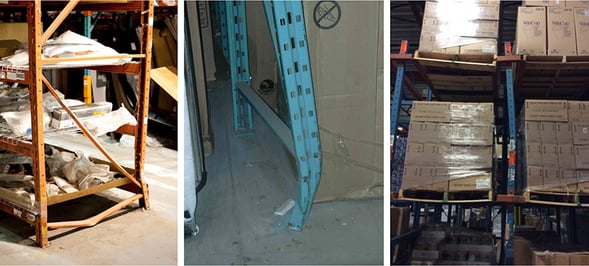
Impacts from lift trucks and other material-handling equipment are a common source of pallet rack damage. Because racks are designed to maximize storage capacity—not absorb impacts—even relatively small collisions can reduce their structural performance.
A common mistake is assuming that because a rack is still standing, it is still safe.
A damaged rack should never be ignored simply because operations can continue around it.
To reduce the risk of a more serious incident:
- Implement a documented maintenance program with regular rack inspections.
- Encourage employees to report every rack impact, even if damage appears minor.
- Isolate damaged areas when appropriate until they can be evaluated.
- Contact a qualified rack professional to assess the damage and determine whether repair or replacement is required.
- Consider rack protection products, such as column guards and end-of-aisle protection, in areas where forklifts frequently strike racks.
Prompt reporting and assessment help prevent unresolved damage from remaining in service and allow the appropriate corrective action to be planned.
Rack Safety Training for You and Your Employees
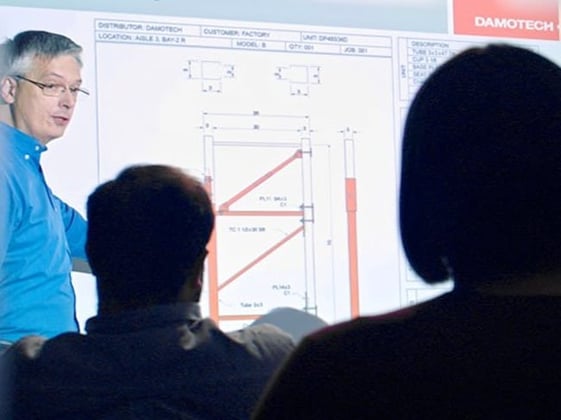
Even the best-designed pallet rack system depends on the people using it every day.
Proper rack safety training helps employees recognize hazards before they become serious problems while ensuring everyone understands their role in maintaining a safe warehouse.
Your training program should include:
- Training forklift operators on proper pallet handling techniques and the consequences of rack impacts.
- Training in-house rack inspectors to recognize common rack damage and understand inspection priorities.
- Educating warehouse managers on when engineering approval is required before modifying rack configurations.
- Training maintenance personnel on approved repair procedures and when structural repairs require engineering involvement.
- Keeping documented records of employee training and rack inspections.
When employees understand why procedures exist—not just what procedures to follow—they are better equipped to identify and report issues promptly.
Related reading: Warehouse Rack Safety Training.
Other Key Rack Owner Responsibilities
Beyond load capacity, damage prevention, and employee training, rack owners should also:
- Comply with applicable building, fire, and occupational safety requirements.
- Maintain adequate lighting throughout storage areas.
- Obtain required permits for rack installations or major modifications where applicable.
- Keep engineering documentation, inspection reports, and load capacity information readily available.
- Review rack documentation whenever layouts or storage requirements change.
- Periodically evaluate recurring damage to determine whether operational changes or additional pallet rack protection are needed.
These responsibilities help ensure the warehouse continues operating within the assumptions used during the original rack design.
A note about ownership: The employer, property owner, warehouse operator, and owner of the installed racking may not always be the same organization. Contracts and applicable law may allocate specific duties differently, so each facility should document who is responsible for rack use, configuration changes, damage response, and corrective actions.
Who Owns What in the Warehouse?
Although every warehouse is organized differently, responsibilities are typically divided like this:
| Role | Primary responsibility |
|---|---|
| Employer or Facility Leadership | Establish the program, assign authority and resources, and verify that significant hazards and corrective actions are addressed |
| Warehouse Manager or Operations Manager | Coordinate day-to-day rack use, approved loading and configurations, inspections, restricted areas, and corrective actions |
| Forklift Operators | Operate equipment safely, place loads correctly, respect posted limits, and report impacts promptly |
| Maintenance Team | Perform only approved maintenance and repairs, avoid unauthorized structural modifications, and document completed work |
| Safety / EHS Personnel | Coordinate procedures, training, records, audits, escalation, and corrective-action follow-up |
| Qualified Rack Design Professional or Engineer | Perform structural evaluations, capacity calculations, LARC updates, and repair or configuration review where required |
Clearly defining these responsibilities helps prevent confusion when rack damage occurs or operational changes are required.
The chart above illustrates a division of responsibilities. Actual legal, contractual, and operational duties vary by facility and jurisdiction.
Taking Responsibility for Rack Safety
The responsibilities outlined above form the foundation of an effective rack safety program.
In practice, however, implementing and maintaining that program can become challenging—especially as warehouses expand, operations change, and documentation accumulates over time.
Working with a knowledgeable rack safety partner can simplify that process.
Qualified engineers can help verify load capacities, inspect existing systems, prioritize repairs, evaluate rack damage, update LARC drawings, and train employees to recognize potential hazards before they become serious issues.
A well-defined rack safety program can support compliance efforts and help ensure everyone understands their role before an incident occurs. More importantly, understanding these responsibilities helps decision-makers take appropriate action to protect employees, preserve warehouse infrastructure, and support efficient operations.
Need help building your rack safety program?
Whether you need load capacity calculations, a professional rack inspection, employee training, or help evaluating damaged racks, our engineers can help you determine the right next step. Talk to a Rack Safety Expert.
FAQ: Pallet Rack Safety Responsibilities
Who is responsible for pallet rack safety?

In the United States, the employer retains the duty to provide a workplace free from recognized serious hazards and to comply with applicable OSHA standards. Day-to-day pallet rack safety activities may be assigned among warehouse management, operators, maintenance personnel, EHS teams, rack inspectors, manufacturers, and qualified design professionals. Assigning a task does not eliminate the employer’s responsibility to ensure that identified hazards are addressed.
What are a rack owner’s primary responsibilities?
Depending on the applicable standards and jurisdiction, a rack owner’s responsibilities typically include keeping load-capacity and configuration documentation current, operating the system within approved conditions, arranging appropriate inspections, responding to damage, controlling modifications and repairs, and ensuring relevant personnel receive suitable training.
When should a rack engineer become involved?
Consult the current LARC drawings before making a change. The original rack manufacturer or a qualified rack design professional should be involved when the proposed configuration is not shown as an approved option, when loads or components change, when racks are relocated, when capacity documentation is missing, or when structural damage is suspected. Applicable codes or local authorities may require review by a licensed professional engineer.
What should happen after a forklift hits a rack?
The impact should be reported promptly, the location and visible condition documented, and further interaction with the affected rack controlled in accordance with the facility’s procedure. If severe damage or instability is suspected, the affected portion should be isolated immediately and evaluated by a qualified storage rack design professional before normal use resumes.
Do rack owners need to keep LARC drawings?
Rack owners should retain current LARC drawings—or the equivalent approved load and configuration documentation applicable to their system and jurisdiction. These records identify approved configurations and capacities. When the installed system or a proposed change is not covered by the existing documentation, the system should be reviewed and the documentation updated.