Want to know what it really takes to lead world-class manufacturing operations? Read on for the real-world playbook of a modern COO—where purpose, people, and safety always come first.
Based on an exclusive interview with Damotech’s COO, Geneviève, this article reveals how she leads operations from the ground up.
Setting the Pace: How a Manufacturing COO Starts Each Day
 Before most alarms ring, the heartbeat of Damotech’s operations is already in motion. At 6:15 a.m., Geneviève, Damotech’s pioneering Chief Operating Officer, scans the night report and dashboard, piecing together the story of the previous shift and setting the stage for the day ahead. “The first thing I do is read the night report and check our dashboard. Then I set the plan and welcome the team as they arrive.”
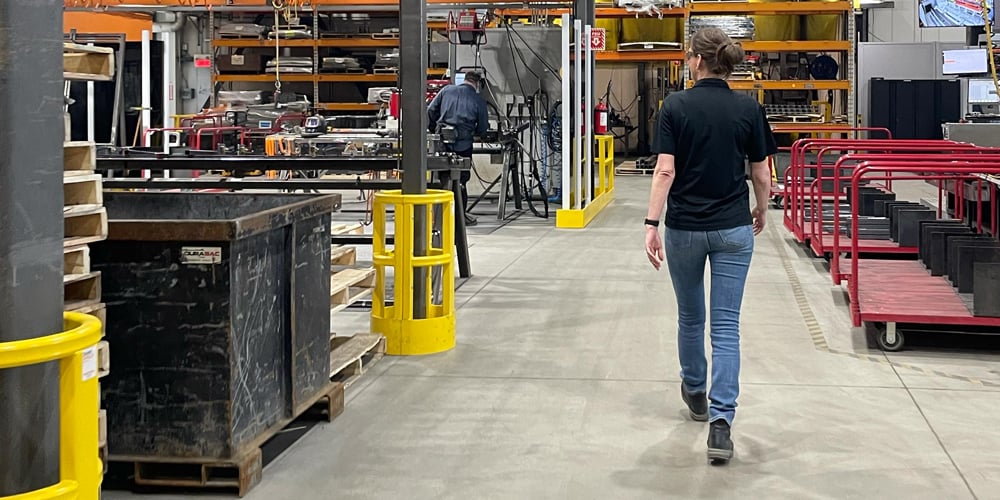
This isn’t just about process—it’s about presence. She spends nearly 70% of her day on the production floor, not behind a desk. She’s there to greet the morning crew, listen to their updates, and ensure everyone is aware of their role. Her leadership style is hands-on, rooted in the belief that “operations aren’t just about machines and schedules; they’re about people. I see myself as a facilitator of success.”
In a world where automation accelerates and supply chains are unpredictable, Geneviève’s approach is refreshingly human. She believes that clear guidelines, open communication, and a culture of trust are the foundation of operational excellence.
“The guidelines must be obvious,” she emphasizes. “People need to be well-trained, have the right tools, and know exactly what’s expected of them. My job is to make sure they have everything they need to succeed.”
What Is the Role of A COO in Manufacturing?
If you’re asking, “What is the role of a COO in a company?” here’s the short version: a Chief Operating Officer is the architect of daily execution, translating the CEO’s vision into actionable plans and ensuring every department—from production to quality, from supply chain to automation—works in harmony. If you think a COO is just a “super site manager,” think again.
At Damotech, the COO’s remit spans people, process, technology, and risk, always with a focus on safety and continuous improvement. Her day is a blend of strategic oversight and real-time problem-solving. Whether it’s troubleshooting a sudden equipment breakdown or coaching a team member through a new process, she’s present, adaptable, and always learning.
“There’s no such thing as a typical day,” she admits. “The background is always the same, but the challenges change, sometimes it’s material access, sometimes equipment stability, sometimes it’s about people.”

Inside the Day: The COO’s Playbook
“The first thing I do is read the night report and check our dashboard. Then I set the plan and greet the team as they arrive.”
6:15 a.m. — Night report → dashboard → plan.
She scans the previous night’s report and live metrics to spot priorities, constraints, and carry-overs. Clear plans are in place: what must move today, who needs what, and where the risks lie.
7:00–8:00 a.m. — Team arrivals & kickoff.
She welcomes the morning crews, shares priorities, and confirms who’s on station. Brief, frequent alignment is more effective than a single, lengthy meeting.
8:00 a.m. & 10:00 a.m. — Floor walkthroughs.
She spends ~70% of her time on the floor: observing flow, unblocking work, and listening for weak signals. “The guidelines must be obvious,” she says, and face-to-face is still the fastest path to clarity.
3:15 p.m. — Shift-change cadence.
Before the evening crew starts, she’s back on the floor to stabilize handoffs. Questions from the night shift flow through a shared channel so issues don’t idle.
Her presence on the floor isn’t just symbolic; it’s strategic. “Sometimes, you see things on the floor you’d never catch from your office. People might not come to you with a problem, but if you’re there, you notice it right away.”
What That Looks Like in Daily Behavior in a Warehouse
- Hire for skill and values, then give autonomy, tools, and training.
- Keep guides and guardrails visible and straightforward.
- Be available, especially when something breaks.
“Operations aren’t just about machines and schedules—they’re about people. I see myself as a facilitator of success.”

COO Roles and Responsibilities (Manufacturing Lens)—A Quick “COO Job Description” Snapshot
- Build and run the operating system: goals, standards, reviews, and warehouse KPIs.
- Ensure asset reliability and safe, stable flow across shifts.
- Orchestrate cross-functional work (supply chain, production, quality, HSE, engineering, IT/automation).
- Translate strategy into capital plans, capacity, and skills development.
- Foster a culture where people are trained, equipped, and trusted to do their best work.
Top 3 Objectives of a Manufacturing COO
- Operational excellence. Daily work needs clear standards, reliable assets, and a management system that separates noise from signal. When a line stops, production doesn’t have to, but the workaround takes coordination, creativity, and resources.
- Strategy & adaptability. The COO agenda isn’t only about today’s takt time; it connects decisions to outcomes six to 36 months in the future (capacity, technology, skills, and stakeholders).
- Innovation with a people-first core. Automation is welcome when it helps people grow and thrive. At Damotech, general laborers have learned to operate advanced tools; new systems are introduced with coaching and clear job pathways in place.
Key Strengths of a COO
- Presence on the floor: sees reality first-hand and acts quickly.
- Systems thinking: links strategy to assets, skills, and flow.
- People leadership: develops talent, clarifies expectations, and builds trust.
- Calm under pressure: triages downtime and keeps the plan moving.
- Safety mindset: treats safety as the prerequisite to speed.
Safety First, Then Speed (Never the Other Way Around)
“I don’t try to balance safety and efficiency. Safety comes first. Efficiency follows from a safe environment, the right processes, tools, and people.”
For warehouse operations, that stance is also a regulatory reality. OSHA’s 29 CFR 1910 Subpart N governs materials handling and storage; §1910.176 requires stable stacking, clearances, and safe housekeeping, which are foundational to maintaining uptime and preventing injuries.
For racking, ANSI/RMI MH16.1 sets the engineering basis across North America. Damotech’s engineering team adheres to these standards in inspections, load capacity calculations, and safety training.
Pro Tip for COOs
Tie your daily walk-through to these anchors (e.g., clear aisles, stable stacking, legible load plaques, visible guarding). It sharpens conversations and reinforces a culture driven by safety and security.
Who Typically Reports to a Manufacturing or Material Handling COO?
Reporting lines vary by company, but standard direct reports typically include Production/Manufacturing, Supply Chain/Logistics, Quality, Health, Safety & Environment (HSE), Engineering/Maintenance, and, depending on the company’s size, IT/Automation and Customer Operations/Service. In matrixed organizations, HR and Finance often partner closely, even if they report to different departments.
How Stressful Is A COO Job?
It’s a high-stakes role because the COO is responsible for upholding the daily promises to customers and employees. Stress arises from unplanned downtime, sudden demand fluctuations, supply chain constraints, and talent shortages. The antidotes are the same strengths described above: preparedness (playbooks and buffers), presence (Gemba), people development, and a safety-first operating system that prevents minor issues from becoming crises.
“You have to be creative and flexible. Sometimes, the cost of a mistake is an investment in improvement.”
Resilience Checklist for the Manufacturing COOs
- Pre-plan manual modes for critical steps.
- Keep a minimum safety stock of high-impact components.
- Line up responsive suppliers; test escalation paths quarterly.
- Crosstrain for swing roles to absorb shocks.
Building Teams & Safety Culture That Scale
Damotech’s COO separates deep technical vetting (by domain managers) from the “look-you-in-the-eye” human fit. She optimizes the system so that experts can exercise their expertise: autonomy, tools, development, and a clear plan.
The result is a floor that can laugh together and still hit the day’s plan. It’s also a talent pipeline—many CEOs still come from president/COO seats—so investing in a real COO agenda elevates both operations and succession.
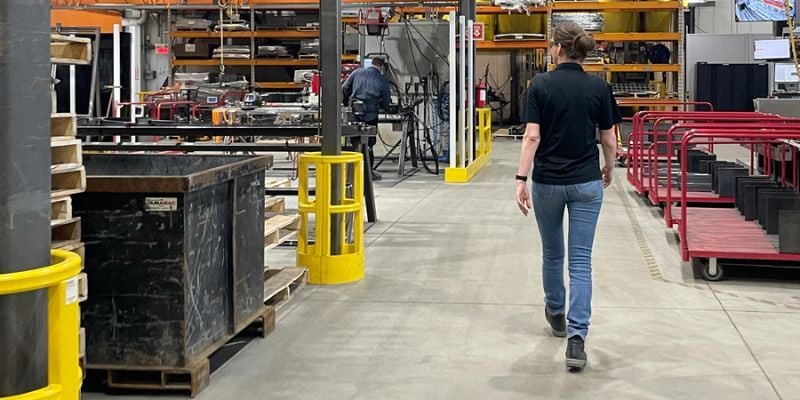
How to Run A 10-Minute Warehouse Walk (COO Edition)
- Pick one flow (e.g., inbound → cut → paint → pack).
- Ask for the goal of this hour (not the day): “What does good look like right now?”
- Spot blockers (safety, material, machine, staffing).
- Remove one friction on the spot (tool, approval, clarification).
- Close the loop: what changed because of this walk?
Conclusion: Purposeful Presence Beats Speed-For-Its-Own-Sake
Modern COOs succeed by arriving early, walking the floor, eliminating friction, and making safety a non-negotiable priority. Technology and metrics matter, but people make the line run. Lead with intent, measure what matters, and keep learning in the flow of work.
Want to find out more about what makes Damotech great? Download our brochure to discover how our engineering-backed solutions keep warehouse operations safer, stronger, and more efficient.
FAQ Related to COO Roles and Responsibilities
What is the role of a COO?

A COO turns strategy into day-to-day results—owning people, process, technology, and risk so the company delivers safely, reliably, and profitably.
What is the role of a COO in a company?
At the enterprise level, the COO role aligns the CEO’s vision with execution: capacity planning, asset reliability, talent development, and cross-functional orchestration across shifts, sites, and partners.
What should the COO job description include?
Clear COO roles and responsibilities: operations leadership, safety and compliance, supply chain and quality oversight, asset reliability and maintenance, capital/capacity planning, continuous improvement/automation, KPI governance, and culture building.
Who typically reports to a COO?
Production/Manufacturing, Supply Chain/Logistics, Quality, HSE, Engineering/Maintenance, and sometimes IT/Automation or Customer Operations—varying by structure and scale.
How stressful is a COO job?
It’s demanding due to the need for real-time accountability for output, safety, and customer promises. Stress is managed through preparation (playbooks, buffers), presence (Gemba), strong teams, and a safety-first management system.
What are the key strengths of a COO?
Floor presence, systems thinking, people leadership, calm under pressure, and an uncompromising safety mindset.
What are the top 3 objectives of a COO?
Operational excellence, strategy & adaptability, and people-centered innovation—so safety, quality, and flow improve together.