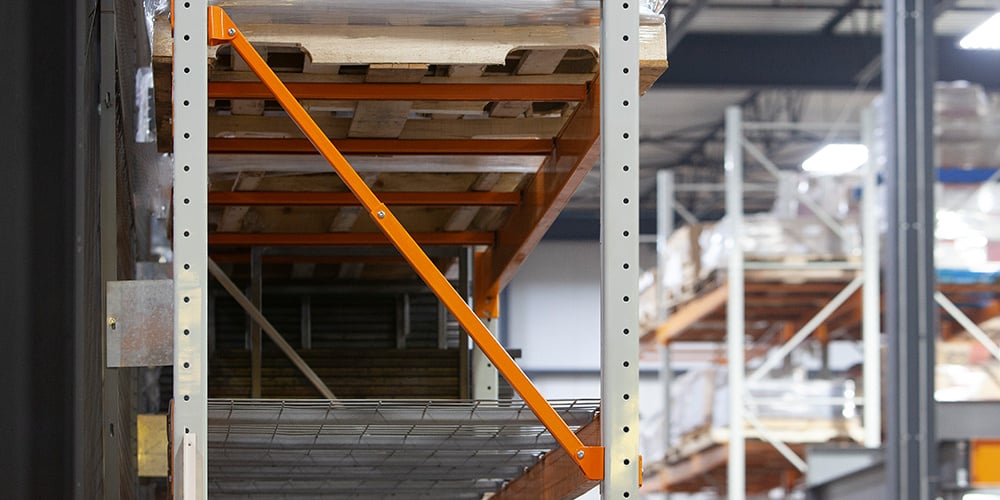

A pallet rack frame is a system: braces, columns, beams, and baseplates all work together to carry the load. The strength of that system depends on every component — including the one that's easiest to overlook, the pallet rack bracing. These diagonal and horizontal members are bolted or welded between the frame columns in a specific, engineered pattern.
Braces look small, but they do heavy work. They keep the frame square, resist side-to-side and front-to-back movement, and help the uprights carry their rated load. This guide covers what pallet rack bracing does, the types of racking braces you'll see, how braces get damaged, how to inspect them, and what to do when one is damaged.
What Does Pallet Rack Bracing Do?
Pallet rack bracing holds the upright frame rigid so it stays plumb and can carry its rated load. The uprights carry the weight of your inventory down to the floor, giving the frame its vertical strength — but if an upright drifts out of position, that strength drops fast. Braces, sometimes called struts, are engineered to stop the frame from moving side-to-side or front-to-back and to keep the posts in plumb.
By resisting that lateral movement, braces are a key line of defense against progressive, domino-style frame failure — the kind seen in the warehouse collapse videos available online. That makes pallet rack bracing central to the integrity of your whole racking system.
Your brace pattern should match your original Load Application and Rack Configuration (LARC) drawings. If one frame's bracing looks different from the rest, treat it as a flag for damage or an unauthorized modification.
What Are the Types of Racking Braces?
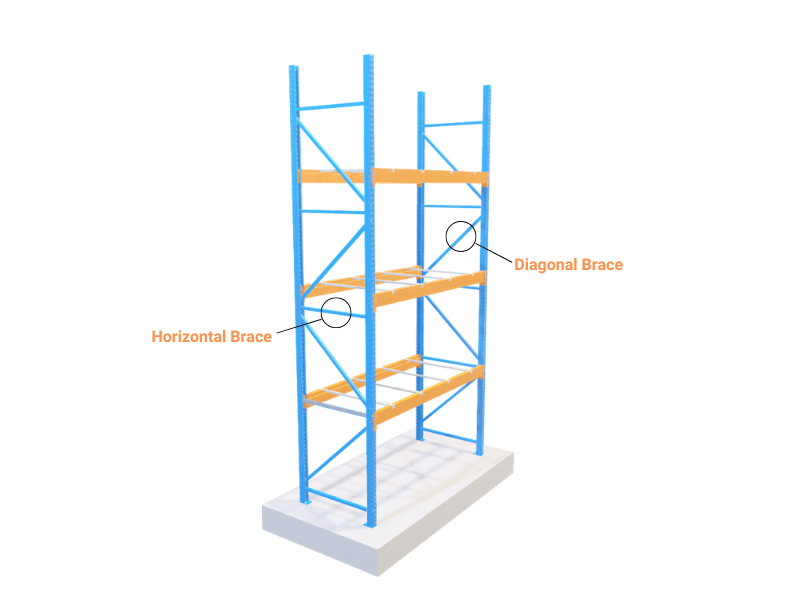
Most pallet rack frames use two types of racking braces, and each does a different job:
- Horizontal braces run straight across between the two uprights of a frame. They set and hold the spacing between the columns.
- Diagonal braces run at an angle between the horizontals. They add the directional rigidity that keeps the frame from swaying and provide the down-aisle stability that horizontals can’t deliver on their own.
Together, a horizontal-and-diagonal pattern is the standard setup for most systems. The original engineer chose that pattern and spacing for your specific loads and use — which is why a missing racking brace or an altered pattern is worth investigating, not ignoring.
What Causes Pallet Rack Bracing to Get Damaged?
Braces are among the most vulnerable parts of a racking system. Most are made from lighter-gauge steel than the uprights and sit in exposed, easy-to-hit locations, which makes them prone to impact from forklifts, pallets, and product. Less obvious factors like corrosion and improper loading do slower damage. Here are the six causes to watch for.
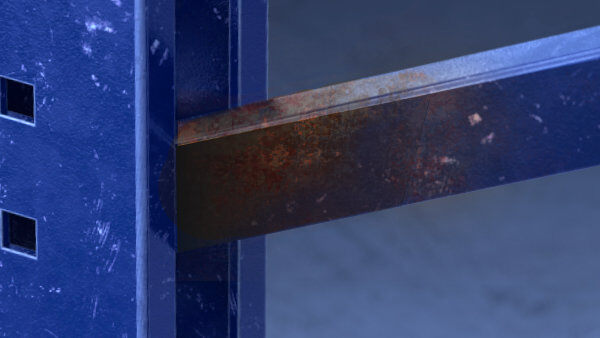
1. Rust and corrosion
Corrosion is steel’s worst enemy — it eats away at strength and structural integrity. Like any metal component, braces (or struts) take damage from moisture and chemicals, and corrosion is far more likely in harsh industrial environments. If your operation runs in those conditions, inspect for corrosion more often than usual. Look for severe rust and the early stages where paint has started to fail. Don’t dismiss rust as surface-level: there can be more damage inside a brace than shows on the outside, and a qualified inspector can quantify it precisely.
2. Forklift and pallet strikes
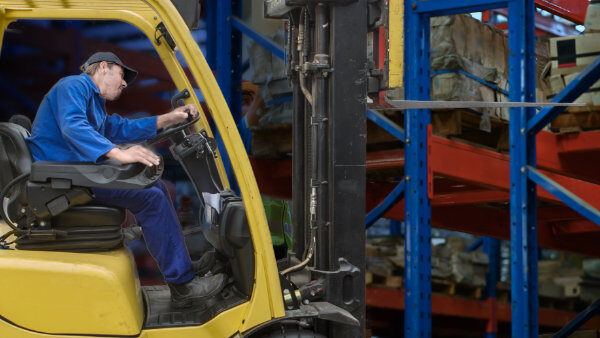
Forklift impact is one of the most common causes of damage to a pallet racking system — and one of the most common causes of collapse. Even when a hit damages another component first, the same impact can weaken a brace. Pallet and inventory strikes take their toll too. To reduce the risk:
- Handle loading and unloading with care, and use experienced operators.
- Stay vigilant to avoid contact with the braces.
- Don’t pivot until the pallet is completely clear of the bay.
3. Loose or missing bolts
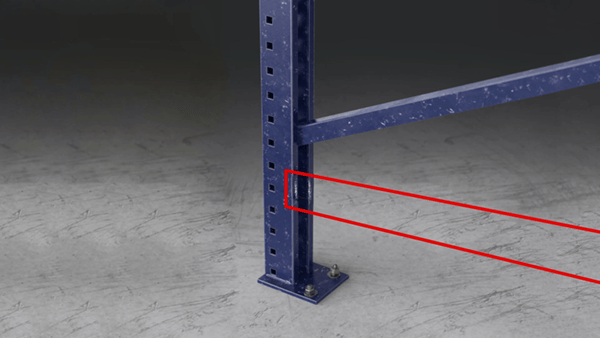
Bolting is a common way to attach components, but bolts can loosen over time. Address loose or missing bolts immediately — left unattended, the frame’s ability to carry loads and resist failure degrades. A brace only provides rigidity to the upright frame if it’s properly connected to the columns.
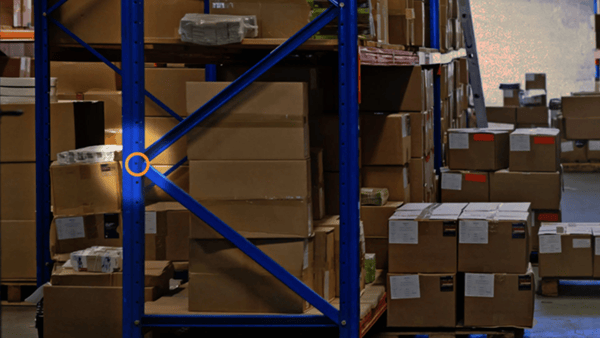
4. Missing components
Check for any missing racking brace across the system. A frame may have been installed incorrectly with a brace left out, or a brace may have been damaged and removed — or knocked off entirely. Scan each frame to confirm every required brace is present. Braces typically follow the same pattern throughout a warehouse, so anything outside that standard pattern is a sign a brace is likely missing.
5. Open panels on pallet racks
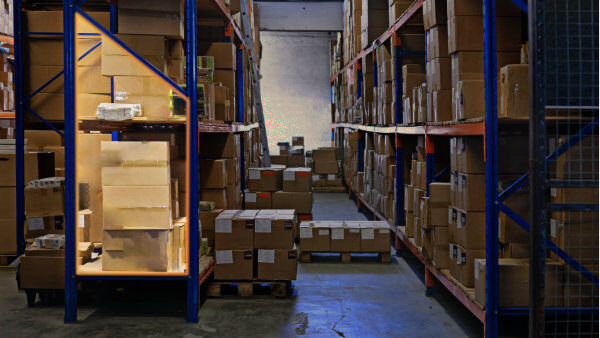
Frames with both horizontal and diagonal bracing are the standard optimum for most pallet racking systems, and those patterns were chosen deliberately by the original engineer for your use pattern. When a frame is missing its engineer-designed diagonal brace, it creates an open panel — generally defined as no diagonal brace between two horizontals.
Diagonal braces sharply increase a frame’s directional rigidity, which horizontals can’t do alone, and they’re responsible for down-aisle stability. Avoid open panels. If you have one, it’s likely from damage or the removal of a component that wasn’t part of the original engineering. Note every open panel, check it against your as-built plans, and look into brace repair kits.
6. Irregular loads
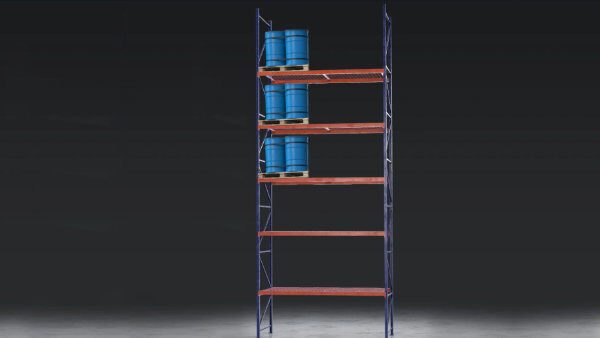
Braces improve protection against damage from irregular loads, but they don’t make the system immune. Uneven load distribution can exceed the tolerance of your bracing. All loading should follow the rack’s load-capacity placards and stay within the load-distribution designations for each bay. Loading outside engineering directions can overload the braces and cause racking failure.
How Do You Inspect Rack Bracing for Damage?
Warehouse rack inspections should always be done by a trained professional — Damotech-trained technicians perform official inspections, and our online and printed inspection guides help your team make an initial observation in between. A single point of damage rarely causes system failure on its own, but unrepaired damage accumulates, and combined failures can bring a frame down. So inspect any damage and act on it.
If you spot damage in a preliminary review, get a free rack damage assessment to diagnose and repair your racks.
What to look for when surveying your braces
- Deflection, deformation, and sheared steel.
- Missing parts, fasteners, or open panels — report any open panels, and get professional help for missing fasteners or connectors.
- Rust and corrosion — check regularly and address even slight corrosion before it grows. Replace affected components where needed; galvanized parts can help mitigate rust.
- Out of plumb or bowed — under ANSI MH16.1, a loaded column shouldn’t lean (out-of-plumb) or bow (out-of-straight) beyond a 1/240 ratio, which works out to about 1/2" per 10 ft of height. A frame leaning or bowing past that has significantly reduced capacity and should be assessed by a professional; damaged or missing braces are a common cause.
After any impact from a forklift, pallet, or other equipment, do an immediate preliminary check to confirm no damage occurred — and have routine inspections look for unreported impact damage too.
Damaged Bracing: Repair or Replace?
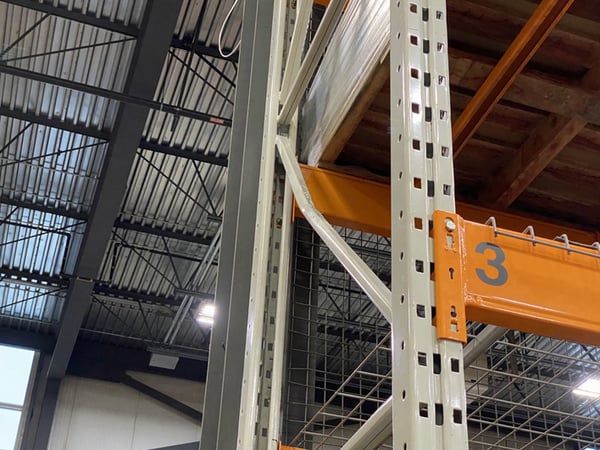
When a brace is damaged, one question decides everything else: is the brace the only casualty, or is the upright column damaged too? The same forklift hit that bends a brace can also shear or bow the post behind it — and that changes the answer.
- Brace only — the brace is bent, dented, cracked, missing, or has broken welds, but the upright column is straight and sound. → Repair is usually the right call.
- Upright involved — the column itself is bent, sheared, or has taken repeated impact. → An engineered column repair or replacement is needed, not just a new brace.
Deciding across a whole damaged bay, not just the brace? See our pallet rack repair vs. replacement guide.
When only the brace is damaged, repairing it beats replacing the upright on nearly every practical measure:
- Lead time — a bolt-on brace repair kit typically ships in under a week; a like-for-like OEM upright can take weeks to months to arrive.
- Installation — a brace repair bolts on in about 30 minutes with no welding; replacing an upright means unloading, dismantling, and rebuilding the bay, often over hours or days.
- Downtime — while you wait for and swap an upright, the surrounding area may sit closed off, and every day out of service is lost throughput.
- Stocking — you can keep adjustable repair kits on hand and fix damage the same day; you can't realistically stock every upright style in your warehouse.
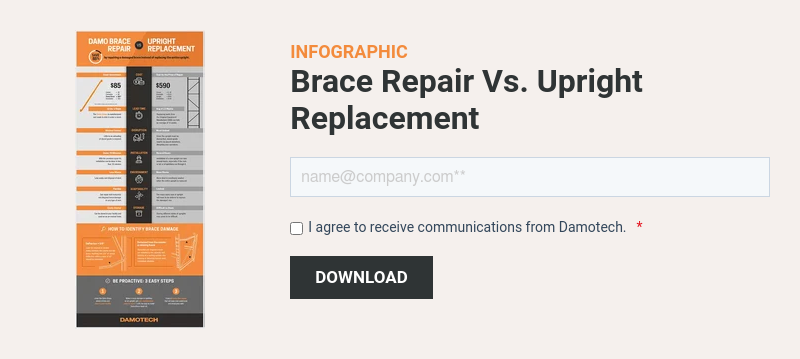
Add it up and customers typically save up to 85% by repairing a damaged brace instead of replacing the entire upright. The right call depends on the type and extent of the damage and should be driven by a qualified assessment — but whichever path you take, the repair should restore the frame to its original engineering specification.
Repairing Braces the Right Way
Repairs should always be done by trained technicians and should match the original engineering specifications of your racking system. Damaged or missing braces should be replaced with parts that are identical or stronger, and engineering-approved.
Damotech engineers pallet rack repair kits for damaged uprights and braces, with standard designs and custom options that work across racking brands, types, and punch styles. Our parts are engineered to meet or exceed the current ANSI MH16.1 consensus standard published by the Rack Manufacturers Institute (RMI); that standard calls for parts that meet or exceed original engineering specifications and are installed by a trained professional.
Not sure if your braces are still doing their job?
Get a free rack damage assessment — a rack safety expert will help you identify whether inspection, repair, or protection is the right next step.
DAMO BRACE: Repair Damaged Braces Without Replacing the Frame
If only the brace is damaged — not the upright column — you often don’t need to replace the whole frame. Damotech’s DAMO BRACE adjustable brace repair kit bolts on in place of a damaged horizontal or diagonal brace, so you can restore the frame fast and keep aisles moving. Because you replace just the brace instead of the entire upright, customers typically save up to 85% compared with a full upright replacement.
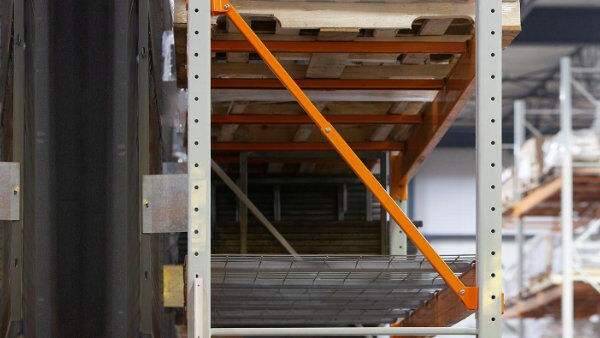
Because the kit is universal and adjustable, you can keep repair kits on-site and fix a damaged brace the same day, instead of waiting weeks for a replacement upright.
If the upright column itself is bent or has taken repeated impact, an engineered column repair or full replacement may be the right call instead — a free rack damage assessment will confirm which you need.
See full DAMO BRACE specs, warranty, and the brace-repair-vs.-upright-replacement comparison →
Pallet Rack Bracing FAQ
What is pallet rack bracing?

Pallet rack bracing is the set of horizontal and diagonal steel members bolted or welded between an upright frame’s columns to keep the frame rigid and plumb. Without it, the uprights can shift side-to-side or front-to-back and lose load capacity.
Are rack braces and rack struts the same thing?
Yes. "Rack struts" is another name for the horizontal and diagonal members that brace a pallet rack upright frame. Whether your team calls them braces or struts, they do the same job — keeping the frame square, plumb, and able to carry its rated load.
What are the different types of racking braces?
There are two main types. Horizontal braces run straight across to set and hold the spacing between the two columns of a frame; diagonal braces run at an angle to add sway resistance and down-aisle stability. Most frames use a repeating horizontal-and-diagonal pattern chosen by the original engineer for your loads.
What causes rack braces to get damaged?
Most brace damage comes from forklift and pallet impact, followed by rust and corrosion, loose or missing bolts, missing components, open panels, and uneven loading. Braces are usually made from lighter-gauge steel than the uprights, which makes them easier to bend or shear.
How do I know if a rack brace is damaged?
Look for deflection, deformation, or sheared steel; missing braces, bolts, or open panels; and signs of rust. A frame that leans or bows noticeably is another red flag — under ANSI MH16.1, a loaded column that’s out-of-plumb or out-of-straight beyond about 1/2" per 10 ft exceeds the limit and should be assessed by a professional.
How much can a pallet rack lean before it’s unsafe?
Under ANSI MH16.1, a loaded rack column shouldn’t be out-of-plumb (leaning) or out-of-straight (bowing) by more than a 1/240 ratio — about 0.05" per foot, or 1/2" per 10 ft of height. Beyond that, the column’s load capacity is significantly reduced, and damaged or missing braces are a common contributing cause.
What is an open panel on a pallet rack?
An open panel is a frame section missing its diagonal brace between two horizontal braces. Because diagonals provide directional rigidity and down-aisle stability that horizontals can’t deliver alone, an open panel usually signals damage or an unauthorized modification worth investigating.
Can a damaged rack brace be repaired instead of replaced?
Often, yes — a damaged brace can be repaired in place with an engineered kit rather than replacing the entire upright, which usually means less downtime and lower cost. The right choice depends on the type and extent of the damage.
When do you need to replace the upright rather than repair the brace?
Use an engineered column repair — or replace — when the upright column itself is bent, sheared, or has taken repeated impact. A new brace can’t restore a compromised column, so the frame’s integrity depends on addressing the column directly.
Is a repaired brace as strong as the original?
An engineered repair is designed to restore the frame’s original configuration and maintain its rated load capacity when installed correctly in accordance with the manufacturer’s specifications. Repairs should always use identical-or-stronger, engineering-approved parts installed by a trained professional.
How much does it cost to repair a brace vs. replace an upright?
Costs are quote-based and depend on your rack, location, and volume, but repairing a brace typically saves up to 85% compared with replacing the entire upright before counting the downtime and lost throughput a multi-week upright replacement adds.