

You already know why rack inspections matter. The harder question is how to actually run the inspection so nothing slips through. This article covers the process itself — the scan pattern to follow, the tools to bring, and how to turn what you find into an action plan.
This is the how. If you first need to know what to check on each part of the rack — baseplates, uprights, braces, beams, connectors, and accessories — start with our guide to what to inspect during a pallet rack inspection, then come back here to run the process. Before beginning, confirm that current rack load-capacity information and applicable engineering or manufacturer documentation are available and posted where required. This information can help identify apparent loading or configuration concerns, but capacity and clearances must be evaluated against the specific rack design, loads, and storage conditions.

What should you look for during a pallet rack inspection?
Before beginning, identify the components and conditions that fall within the inspection scope. A pallet racking system is made up of interconnected components, so each relevant part should be examined. This may include:
- Baseplates, shims, and anchors
- Upright columns and braces
- Beams, connectors, and safety pins
- Safety bars, wire decking, and other rack accessories
- Clearances, pallet overhang, protection, and load-capacity information
5 tips for how to inspect your pallet racks
Tip #1: Follow the same scan pattern every time
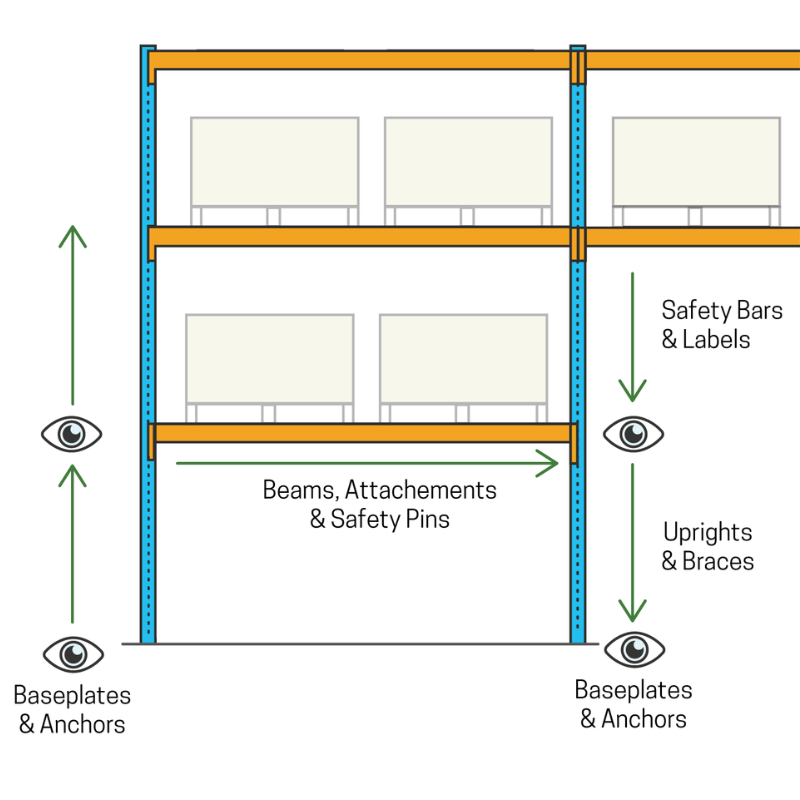
With many aisles to cover, a repeatable path is what keeps you from missing elements. The point here isn’t what to check — it’s how you move through each bay so your eyes hit every part in the same order.
One pattern that works: start at ground level, then work upward and across in a single continuous loop — baseplates and anchors first, up the column and its braces, across the beams and their connections, and back down the next adjacent upright. Then repeat that same loop from one bay to the next. There is no single “correct” order; the value is in picking one path and applying it identically every time, so consistency does the remembering for you.
Tip #2: Divide the warehouse into manageable sections
In a large facility, trying to inspect everything in one pass is where focus breaks down. Break the floor into sections you can assess sequentially. If current Load Application and Rack Configuration (LARC) drawings, rack elevations, and floorplans are available, use them to divide the facility into smaller, repeatable inspection zones. Confirm that the documents reflect the rack configuration currently installed.
It’s hard to concentrate on a repetitive task like this over a long stretch, so split the work into multiple sessions. One approach: schedule each session around one or a few specific item types so your attention stays sharp.
Rotating different employees across sections and components can help build awareness across the team. If employees are expected to identify or report rack conditions, provide training appropriate to their role and the hazards they may encounter.
Tip #3: Bring the right tools for the job
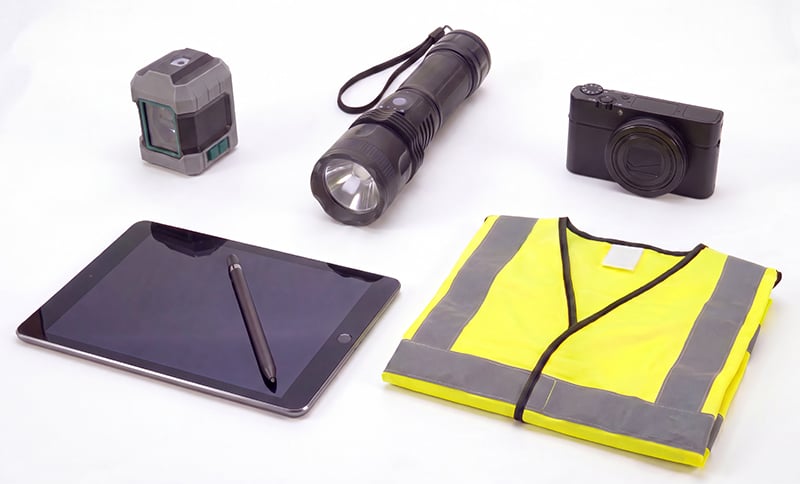
The right kit makes the inspection faster and more accurate. A few items worth carrying:
- Flashlight: portable, for dark spots like the back upright leg
- Plumb bob or laser level: to check upright verticality when required. Measurements should be taken using a suitable method and evaluated against the applicable rack design criteria or qualified professional guidance.
- Pen and paper, or a tablet: to record damage locations and issue types as you find them
- Safety vest with pockets: so you stay visible, especially to forklift drivers
- Camera: to photograph each issue and its location
The tools required will depend on the inspection scope and the conditions in the facility.
Tip #4: Prepare the aisles before you start
A little prep keeps you focused on finding issues instead of clearing obstacles. Coordinate with warehouse operations before the inspection. Aisles and inspection areas should be clear enough to allow a safe assessment, and forklift or pedestrian traffic should be controlled as needed. Do not move pallets, enter an active aisle, or access elevated areas unless the task can be performed safely by trained, authorized personnel using the site’s required procedures.
Schedule inspections during lower-traffic periods when practical, but do not rely on timing alone. Use the site’s traffic-control procedures, barricades, spotters, equipment shutdowns, or other safeguards when required. Inspectors should also follow the site’s requirements for personal protective equipment, safe walking surfaces, and working around material-handling equipment.
Tip #5: Turn your findings into an action plan
Collecting the data is only half the work. To make the inspection worth the effort, you need a way to sort what you found, rank it by priority, and track it to resolution. If a condition may present an immediate hazard, follow the site’s procedure to isolate the affected area, prevent further use, and notify the person responsible for rack safety. Arrange qualified assessment before returning affected equipment or storage locations to service.
A structured checklist (in a spreadsheet like Excel or Google Sheets) or dedicated software like the Damotech Platform lets you flag, analyze, track, and report on each issue:
- Where each rack issue is located
- How many deficiencies or missing components were found
- Which components may require further assessment, repair, or replacement
- The priority level of each issue
- The status and progress of each repair or replacement
If reporting and follow-through are where your process tends to stall, this is often when teams bring in a professional rack inspection to establish a documented baseline.
Where a professional rack inspection fits into your process
Running a consistent internal process is the foundation. Many rack-safety professionals also recommend an annual, in-depth inspection by a qualified rack professional, in addition to routine internal inspections. Depending on the professional’s qualifications and the inspection scope, this review can help identify recurring damage patterns — such as repeated forklift impacts — compare internal findings with an external assessment, and determine whether damaged components require isolation, repair, replacement, or further engineering review.
If you’re short on time or staff, bringing in professional pallet rack inspection services can help establish a documented baseline and support your internal inspection process.

Frequently asked questions about how to inspect racking
What order should I inspect racks in?

There's no single correct order. Pick one repeatable scan path — ground-up and bay-by-bay is common — and apply it identically every time so consistency, not memory, keeps you from missing components. For the full component-by-component breakdown, see what to inspect for each rack component.
What tools do I need for a rack inspection?
Useful tools may include a flashlight, an appropriate tool for checking upright verticality, a way to record findings, a camera, and the personal protective equipment required by the site. The tools required will depend on the inspection scope and facility conditions.
Should I inspect racks myself or hire a professional?
Facilities should establish an internal inspection and reporting process that meets applicable legal, standards, manufacturer, and site requirements. A qualified professional inspection may also be appropriate when the facility needs a documented baseline, has significant or repeated damage, has changed its rack configuration, or needs help evaluating conditions beyond the internal team’s expertise.
These tips are a starting point. A documented inspection process, clear responsibilities, and timely follow-through should form part of a broader warehouse safety program.